Side Return Extension Cleaning in Fulham: Getting SW6 Kitchens Handover Ready
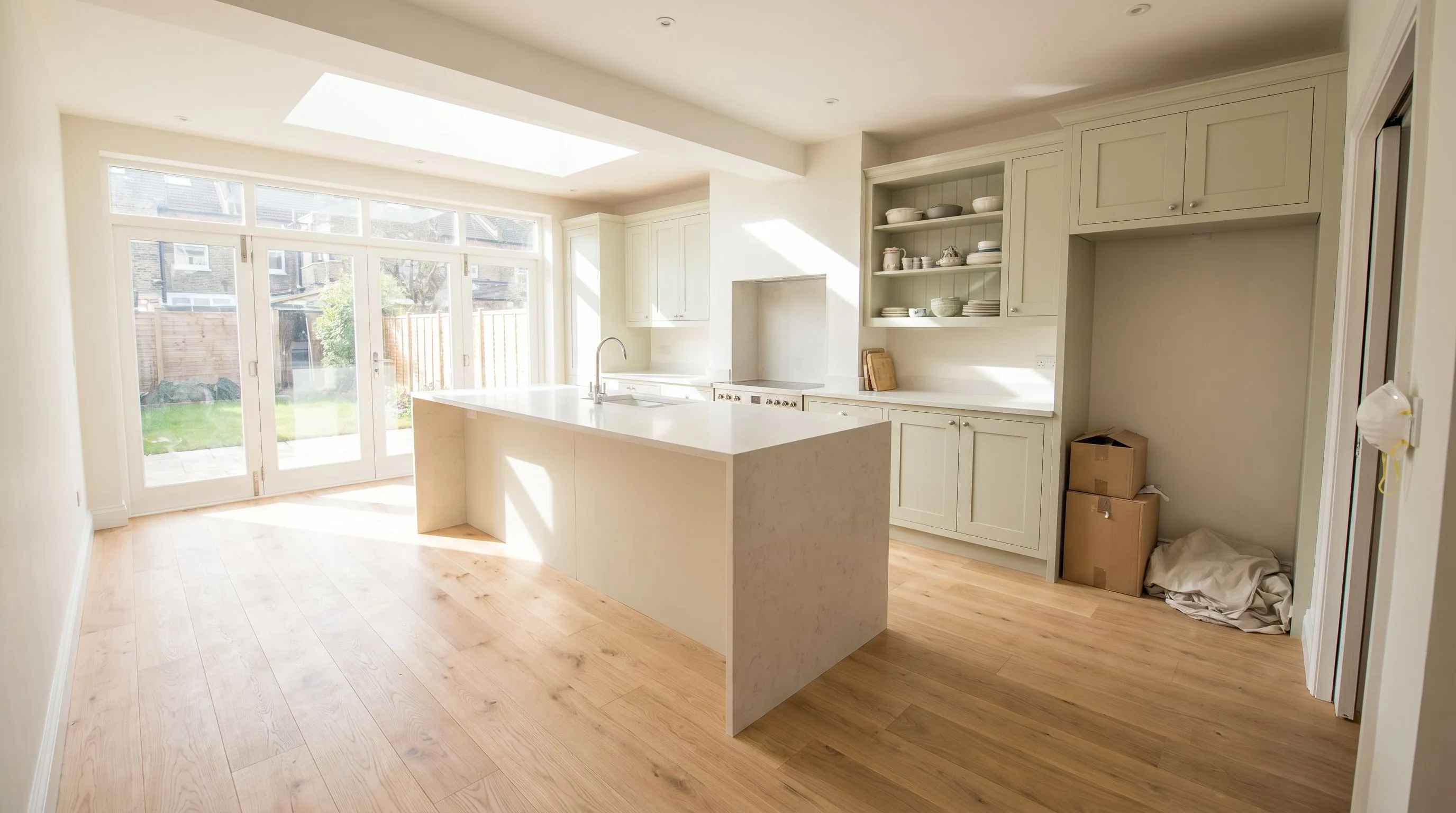
Walk down any street in Parsons Green or Munster Village and count the skips. The side return extension is Fulham's signature renovation, turning the narrow alley beside a Victorian terrace kitchen into a wide, glass-roofed living space.
It is also one of the messiest builds a house can go through, and cleaning after building work on this scale is a different job from any domestic deep clean.
We provide after builders cleaning in Fulham across SW6, and side returns make up a large share of the diary. This guide covers where the dust actually ends up, how the tricky surfaces get cleaned, and when in the project each stage should happen.
Table of Contents
- Why Side Returns Make So Much Mess
- Where the Dust Ends Up
- Cleaning After Building Work, Surface by Surface
- The Glass Problem
- When to Book Each Stage
Why Side Returns Make So Much Mess
A side return is structural work in the middle of a lived-in house. The rear wall comes down, steels go in, the roof is built, and the whole ground floor becomes a construction site for two to four months.
Demolition, brick cutting and chasing produce heavy cement and silica dust. Plastering and sanding follow with a finer dust that behaves almost like smoke, drifting on air movement and settling everywhere.
Then the finishes arrive. A new kitchen means protective film, packaging, silicone sealant, grout haze and adhesive residue on floors. The trades sweep up after themselves, but a broom-clean site and a home you can cook in are separated by a serious amount of detailed work.
The open-plan result makes it worse, not better. There is no door to shut on the mess. The new space connects straight into the hallway and stairs of the terrace, so the dust does too.
Where the Dust Ends Up
After a Fulham side return build, the obvious surfaces are the least of it. This is where we consistently find dust on SW6 projects:
- Upstairs. Fine dust rides air currents up the staircase and settles on landing carpets, bannisters, picture rails and inside bedrooms with closed doors.
- Inside the new kitchen. Cabinet interiors, drawer runners, hinges and the gaps behind kick boards collect dust during fitting.
- Original floorboard gaps. Victorian boards in the front rooms hold dust that resurfaces every time someone walks past, weeks after handover.
- Sash window boxes. The channels and weights compartments in original windows fill with fine dust and keep releasing it.
- Extractors and vents. Bathroom fans and trickle vents pull dusty air through and clog.
- Sockets, switches and downlights. Fine dust sits inside fittings, which need careful dry cleaning rather than a wet wipe.
This spread is why quoting a side return clean on the size of the extension alone never works. The build happened in one room. The dust happened to the whole house.
Cleaning After Building Work, Surface by Surface
Each finish in a new side return needs its own method, and the ordering matters as much as the products. Dry removal always comes first, because wiping dust with a wet cloth turns it into a smeared paste.
| Surface | The problem | The method |
|---|---|---|
| Stone worktops | Plaster dust, silicone smears, etching risk | Dry dust, then pH-neutral clean and full dry |
| Matt or shaker cabinetry | Dust in shadow gaps and mouldings, fingermarks | Soft dry brush and vacuum, then light damp finish |
| Engineered or stone floors | Grit scratching, adhesive and film residue | HEPA vacuum with soft head, residue lifted before mopping |
| Black door and window frames | Every speck of plaster shows | Dry dust frames and seals, then damp detail |
| Integrated appliances | Film, labels, packaging residue, dust in seals | Peel, dissolve residue, polish steel with the grain |
| Brass or aged fittings | Water marks and product damage | Minimal product, soft cloths, immediate drying |
The sequence runs top down: ceiling, lantern frames and downlights first, then walls and glass, then joinery and worktops, floors last. Any other order means cleaning the same surface twice.
The Glass Problem
Glass is the point of a side return, and it is also the hardest part of the clean.
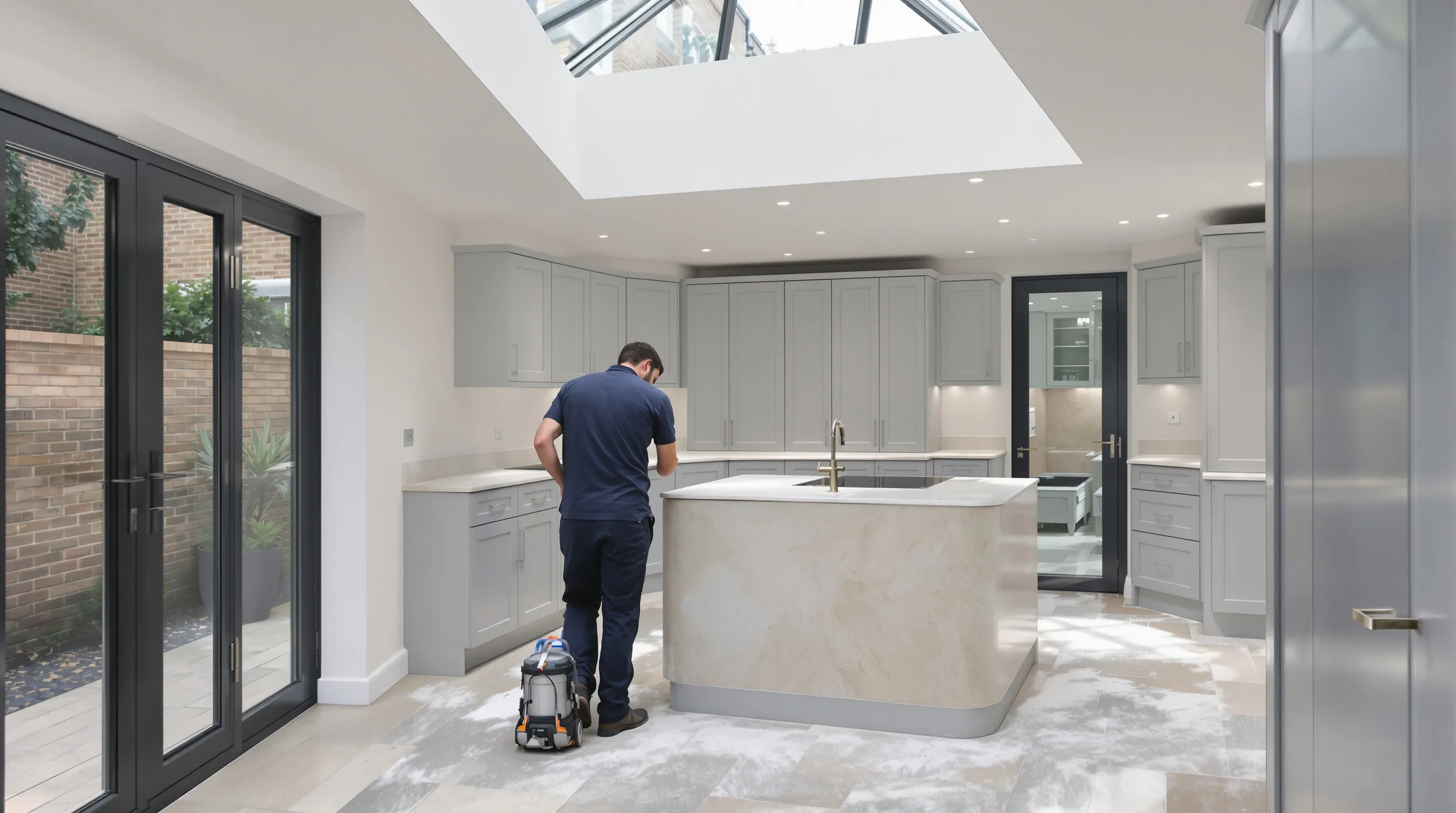
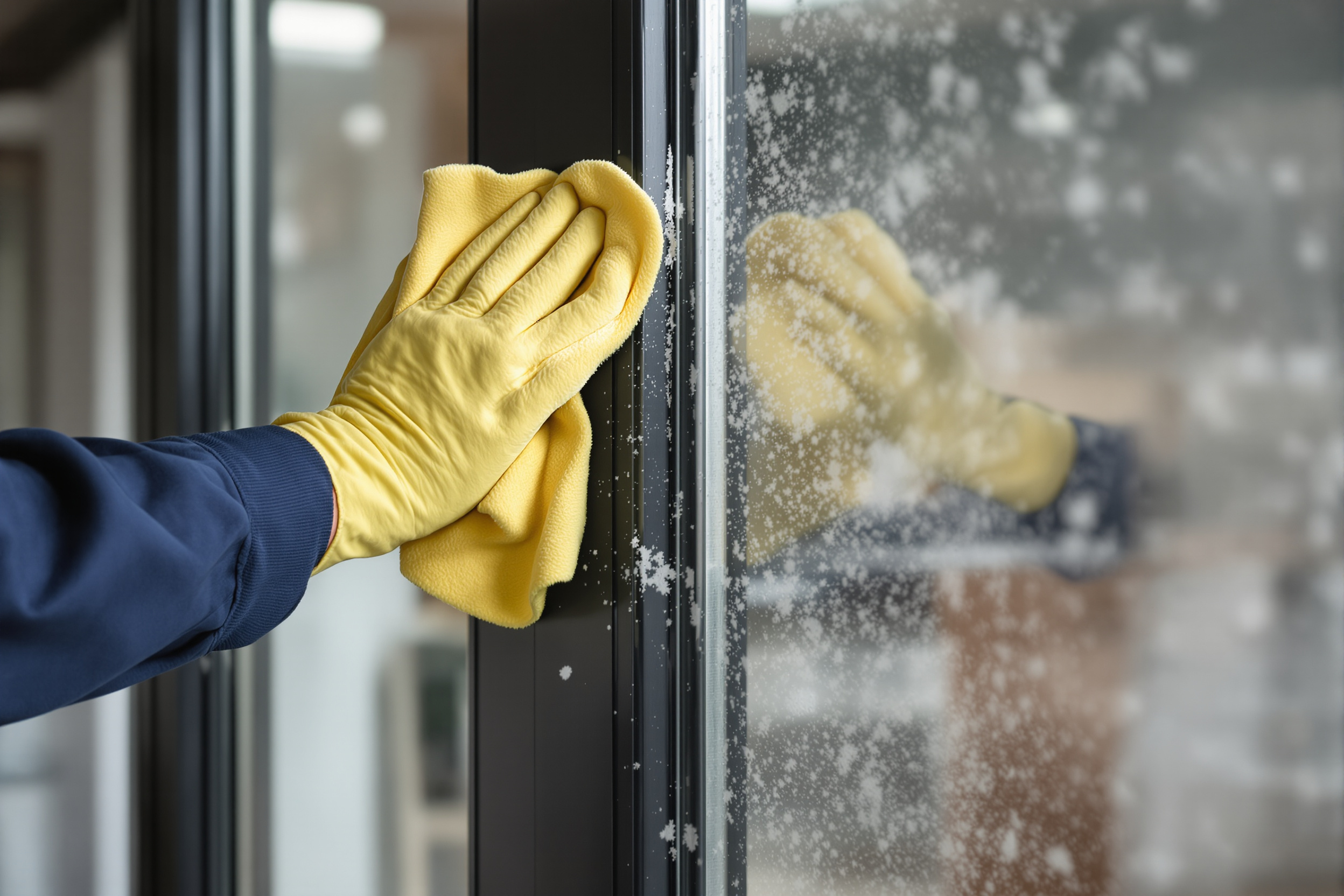
A roof lantern or a run of rooflights sits three to four metres up, above a new kitchen island you cannot stand on. Frameless glass and black aluminium frames show every smear, plaster spot and run of dried mortar, especially with daylight pouring through from above.
The failure mode is rushing it. Plaster and mortar spots need softening and lifting individually before any polishing, because dragging a cloth over dry grit is how new glass gets scratched. Only then is the glass cleaned and finished streak free, frames and seals included.
Bifold and Crittall-style doors add their own detail: tracks full of grit that stop doors running smoothly, weep holes blocked with debris, and manufacturer stickers that have baked on through the build.
For a room-by-room view of how this fits into a whole-property clean, our after builders cleaning checklist covers the full sequence we work to.
When to Book Each Stage
Side returns almost always need two visits, separated by the snagging period.
Builders clean. After plastering, sanding and tiling are done and the kitchen is fitted. Heavy dust extraction through the whole house, residue removal, cabinet interiors, first pass on glass and floors.
Snagging and touch-ups. The builder returns for the inevitable list. Filler, paint touch-ups and adjustments happen here. Any sanding puts dust back into the space, which is exactly why the final clean has not happened yet.
Sparkle clean. The presentation pass. Glass polished, steel finished, floors done last, every label and smear gone. This is the clean that makes the extension look like the architect's photos.
Booking one clean, too early, is the most common mistake we see on SW6 projects. The space gets cleaned, snagging re-contaminates it, and the owners spend their first month wiping plaster dust off a kitchen they paid six figures for. The difference between the two visits is covered in our guide to the builders clean vs sparkle clean.
Costs follow the usual SW6 factors, dust severity, floor count, finishes and access, which are broken down in our Fulham after builders cleaning cost guide.
Get a Fulham Side Return Clean Quoted
For an accurate quote on a side return project, send us:
- the size of the extension and the number of floors in the house
- what stage the build is at, and your target completion date
- photos of the space, including the glass and any heavy dust areas
- the finishes involved, stone, timber, black frames, brass
- parking and access details for the street
Whether the build is off Munster Road, behind Parsons Green or anywhere else in SW6, we can plan the builders clean and sparkle clean around your snagging dates.
Request a quote or read more about our Fulham after builders cleaning service.
Last updated: July 2026. Written by Luke Cervino, founder of The After Builders Cleaning Company, based on side return and kitchen extension cleans completed across SW6.