Post Renovation Cleaning: What To Do After Builders Leave
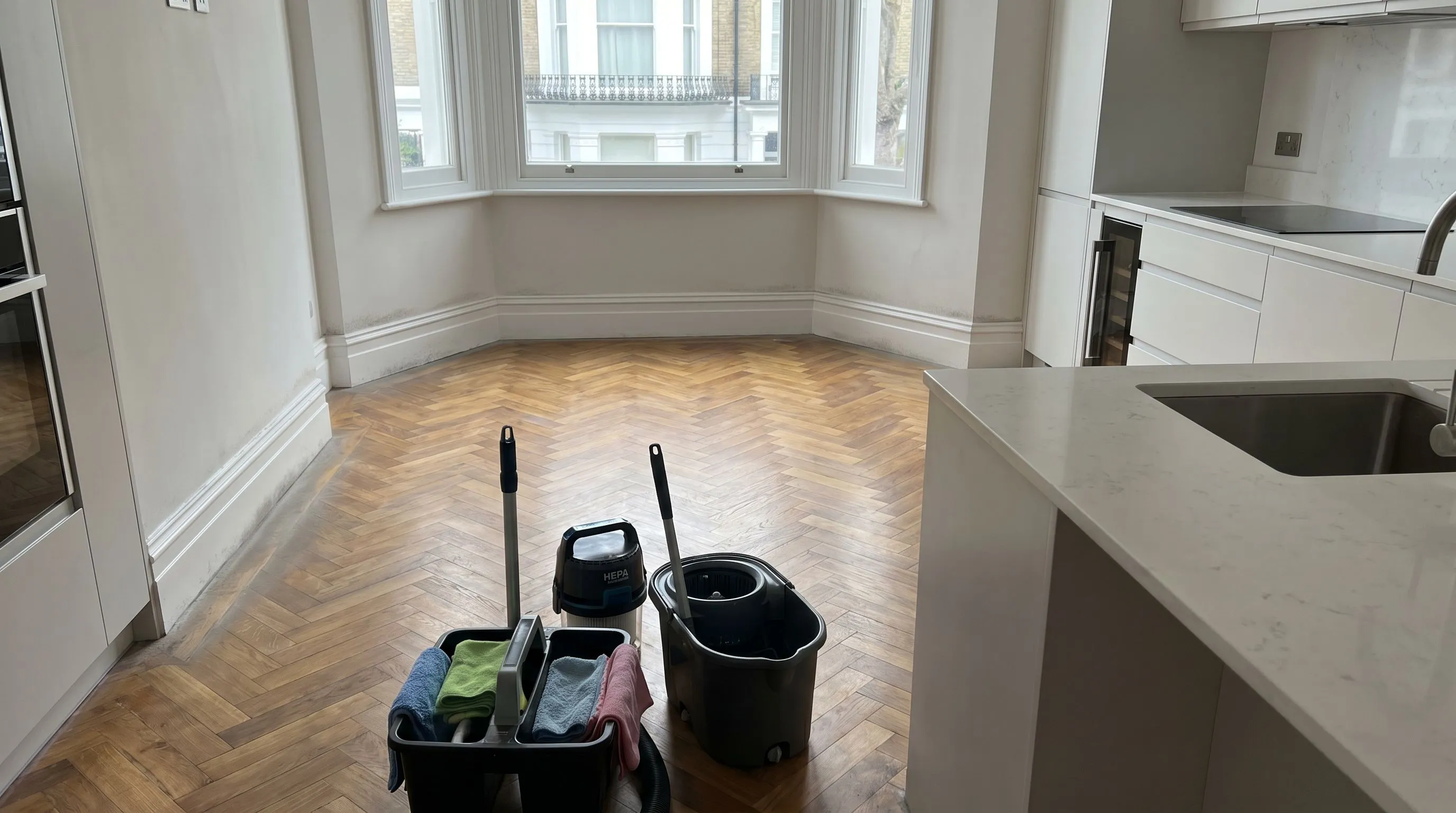
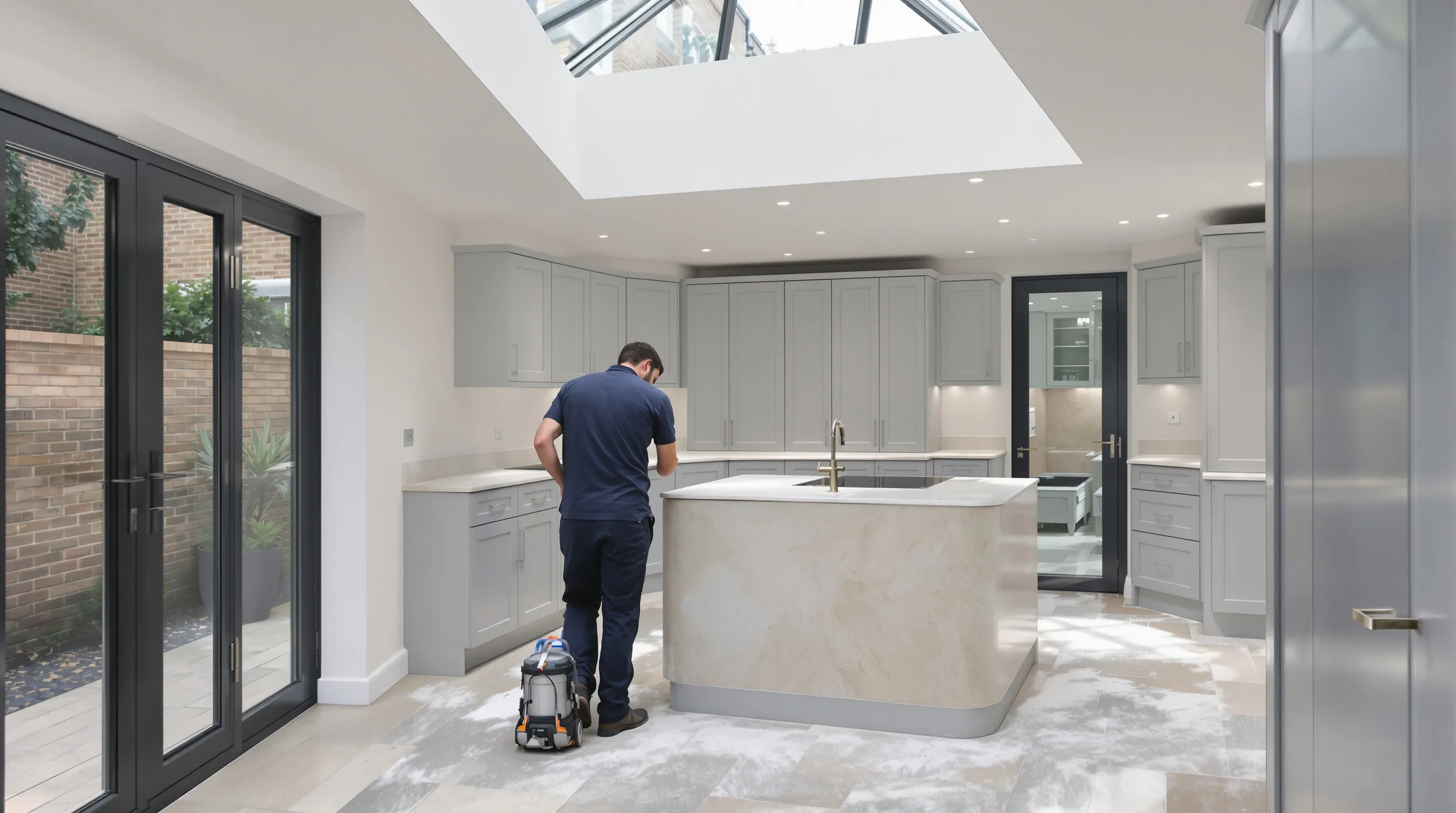
The builders have packed up, the tools are gone, and your renovation finally looks finished. Then the sunlight hits the room and you notice the dust on the skirting boards, the haze on the glass, the plaster in the window tracks, and the grey film sitting on the new floor.
That is where post renovation cleaning starts. It is the structured clean after building work that removes fine dust, paint spots, plaster residue, packaging marks, and the last bits of site mess before the home is ready to live in.
We handle after builders cleaning in London every week, and the biggest mistake we see is simple: people start polishing before the dust has been properly extracted. That turns a messy job into a repeat job.
This guide explains what to clean first, what to leave alone, and when it makes sense to bring in a professional team.
Table of Contents
- What Is Post Renovation Cleaning?
- Why Renovation Dust Is Different
- What To Do Before You Start Cleaning
- The Right Order To Clean After Renovation Work
- What Can You Safely Clean Yourself?
- What Should Be Left To A Professional?
- When Should You Book Post Renovation Cleaning?
- How London Homes Make The Job Trickier
- Post Renovation Cleaning Checklist
- FAQs
What Is Post Renovation Cleaning?
Post renovation cleaning is the deep clean carried out after refurbishment, decorating, extension, kitchen, bathroom, or whole-house renovation work. It removes construction dust, residue, adhesive, paint spots, plaster marks, and debris so the property is safe, clean, and ready for snagging, moving in, photography, or handover.
It is not the same as a normal domestic clean. A domestic clean deals with lived-in dirt: crumbs, limescale, fingerprints, pet hair, and general dust.
Post renovation cleaning deals with building residue. That means fine plaster dust, grit, cement traces, grout haze, sticker adhesive, sealant smears, and dust that has travelled into rooms the builders never worked in.
On bigger projects, this often happens in two stages:
| Stage | Purpose | Best Timing |
|---|---|---|
| Builders clean | Remove heavy dust, residue, and site mess | After main trades finish |
| Sparkle clean | Final presentation clean | After snagging and touch-ups |
If you are unsure which stage you need, read our guide to builders clean vs sparkle clean. The short version: do not book a sparkle clean while trades are still drilling, sanding, or touching up paint.
Why Renovation Dust Is Different
Renovation dust is finer, more abrasive, and more mobile than normal household dust. It settles on visible surfaces, but it also sits inside cupboards, window tracks, sockets, radiator grooves, extractor vents, and the tiny gaps around skirting boards.
The awkward bit is that it keeps coming back. You wipe a surface, disturb the air, and a fresh layer settles a few hours later.
That is why a proper post renovation clean starts with extraction rather than polishing. Industrial vacuuming, top-down dust removal, and damp wiping come before glass polishing or floor finishing.
There is also a safety point. Construction dust can include respirable crystalline silica from concrete, mortar, stone, tiles, and some plaster-based materials.
The Health and Safety Executive warns that construction dust exposure can cause serious lung disease, especially when dry sweeping or poor filtration pushes fine particles back into the air. You can read the HSE guidance on construction dust.
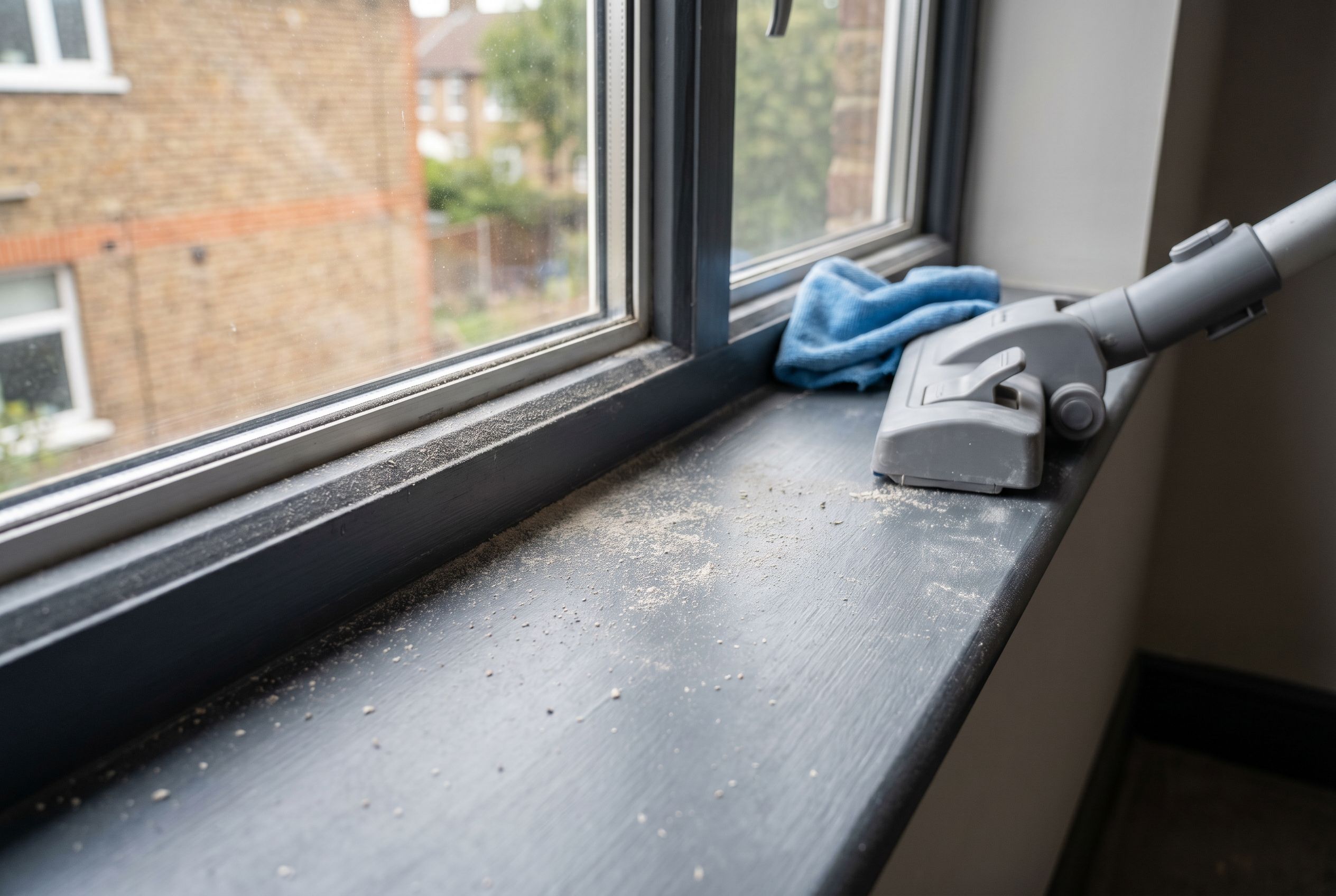
We have covered this in more detail in our guide to the hidden dangers of construction dust, but the practical advice is simple: avoid dry sweeping and do not use your main household vacuum on builders dust.
What To Do Before You Start Cleaning
Before you start post renovation cleaning, check whether the building work is genuinely finished. If decorators, electricians, joiners, or plumbers are coming back tomorrow, you are probably too early for a final clean.
Do this first:
- Walk every room in daylight and note obvious snags.
- Ask the builder whether any sanding, drilling, sealing, or touch-up painting remains.
- Remove loose packaging, offcuts, and protective film only where it is safe to do so.
- Open windows briefly for ventilation, but avoid creating strong draughts that move dust through the house.
- Keep new soft furnishings, rugs, and curtains out until the dust has been extracted.
Take photos before cleaning. They help if you need to separate cleaning issues from builder snags later.
This is especially useful for glass scratches, paint spots, chipped tiles, and marked worktops. Once you start wiping surfaces, it becomes harder to prove what was already there.
The Right Order To Clean After Renovation Work
The right order is top-down, dry-to-damp, and rough-to-final. In plain English: remove high dust first, extract the fine dust, then wipe, then polish.
If you start with floors, they will be dirty again within an hour. If you polish glass before removing grit from the frames, you risk dragging abrasive dust across the surface.
1. Clear Loose Debris
Remove packaging, tape, spare materials, dust sheets, cardboard, and obvious offcuts first. Do not drag debris across new flooring.
Bag waste properly and keep it separate from normal household rubbish if it contains building materials. On larger London projects, disposal arrangements should be agreed before the cleaners arrive.
2. Extract Dust From High To Low
Start with ceilings, high shelves, curtain tracks, door tops, light fittings, extractor grilles, and the tops of kitchen units.
Then move down to walls, radiators, sockets, skirting boards, window sills, and floors. This order matters because dust falls as you work.
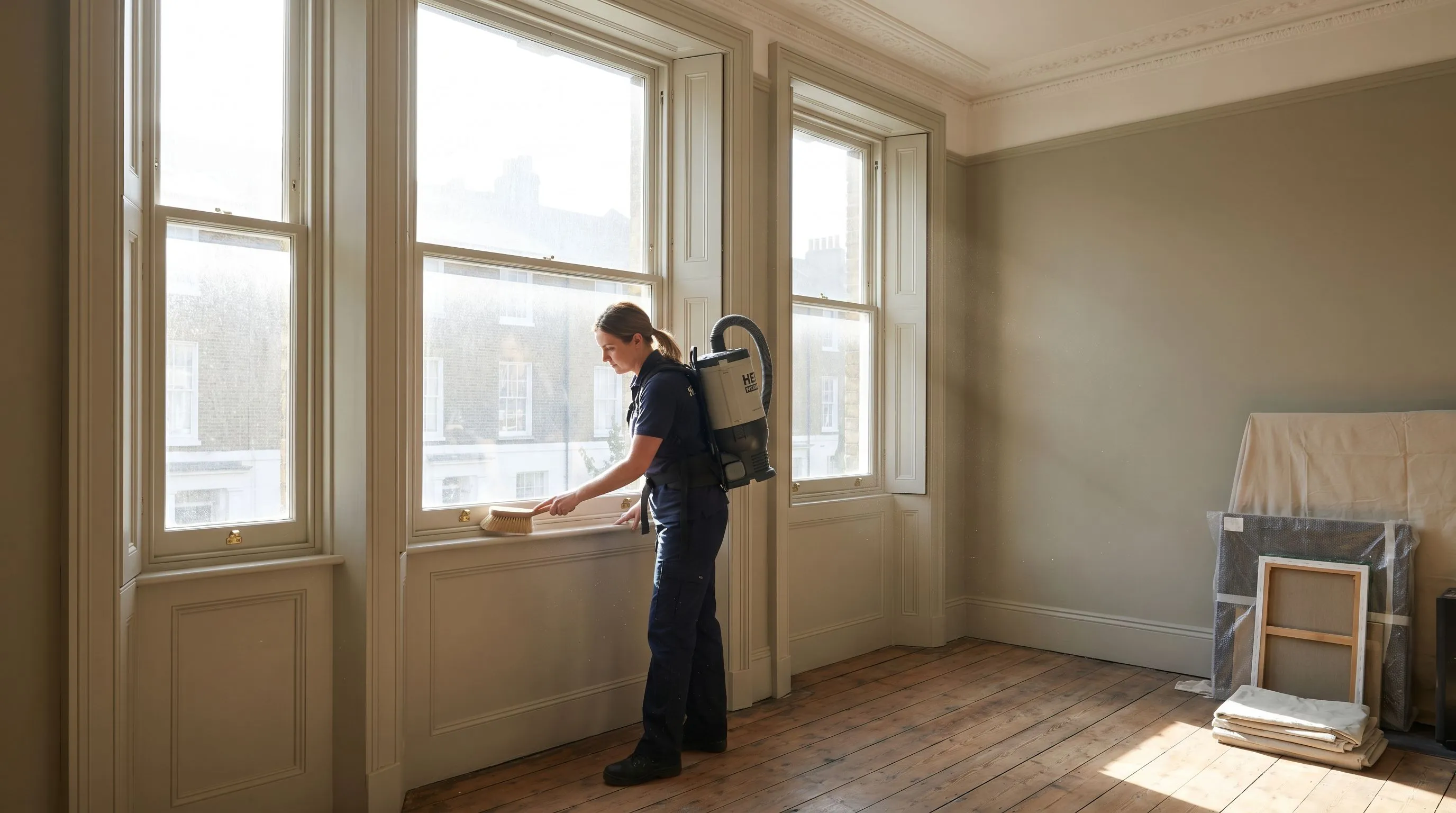
3. Clean Windows, Frames, And Tracks
Renovation glass usually needs more than a spray and cloth. Paint spots, plaster flecks, silicone, adhesive, and label residue all need careful removal.
The frames and tracks matter just as much as the glass. Dust collects in the channels and blows back into the room when the windows are opened.
4. Detail Kitchens And Bathrooms
Kitchens and bathrooms gather the most residue because they have new fittings, tiles, grout, sealant, chrome, glass, and appliances.
Clean inside cupboards before filling them. Once plates, pans, toiletries, and towels go in, the job becomes twice as fiddly.
5. Finish Floors Last
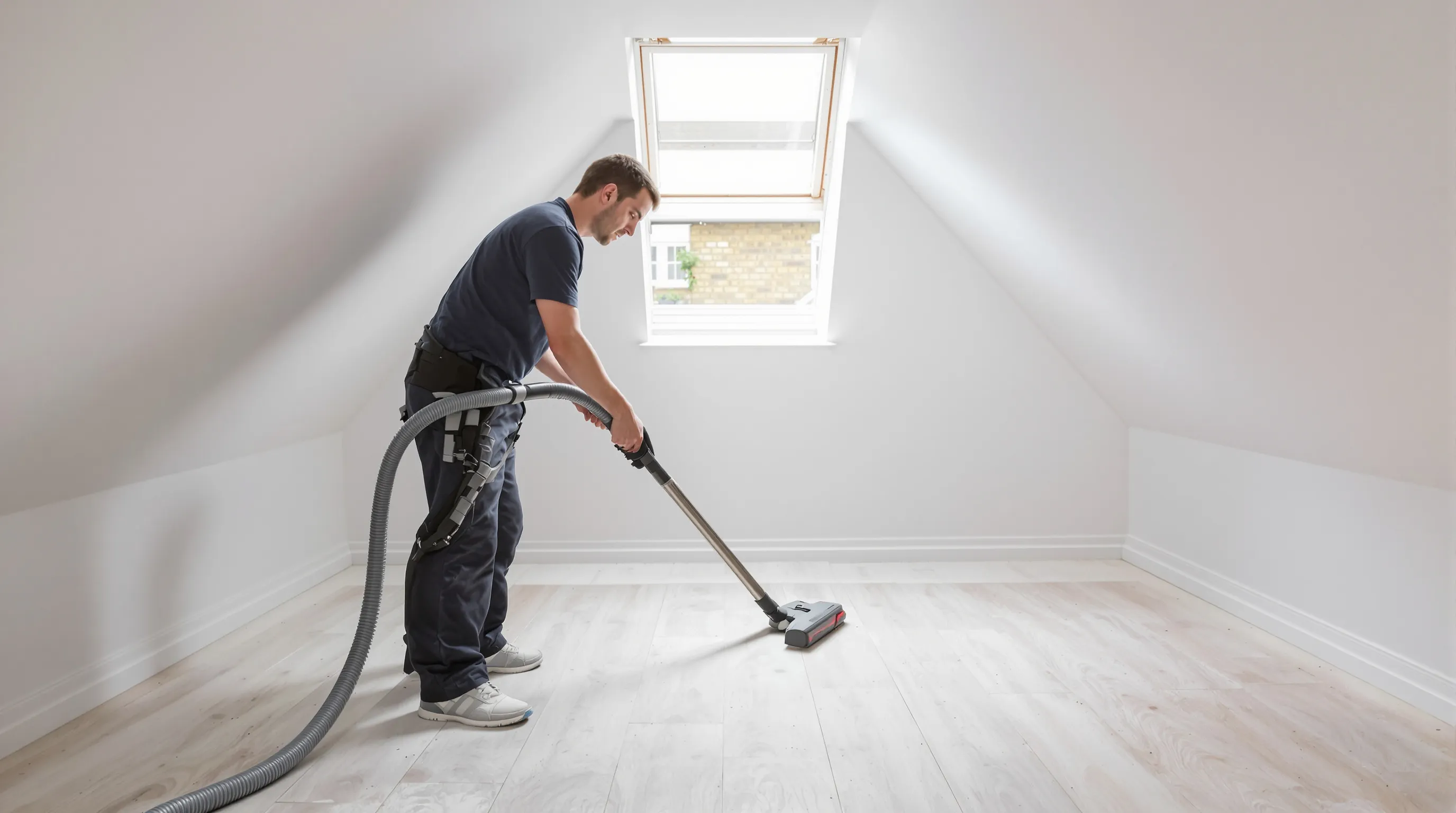
Floors should be vacuumed before any mopping. Mopping dusty floors too early creates a grey paste that settles into grout lines, timber grooves, and textured tiles.
Different floors need different products. A cleaner that works on porcelain can damage natural stone, and too much water can harm some engineered wood floors.
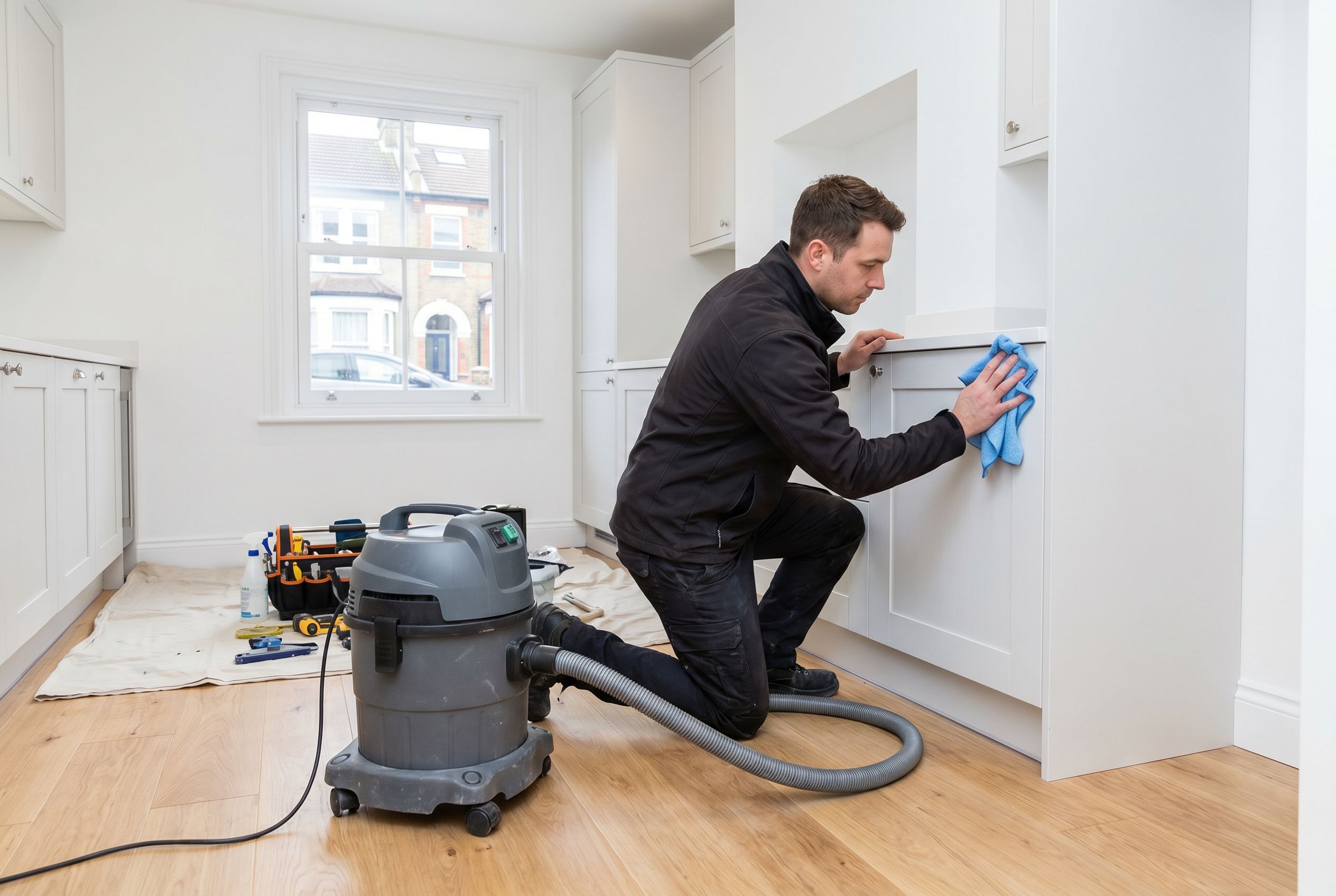
What Can You Safely Clean Yourself?
You can safely handle light post renovation cleaning if the work was minor, the builder kept the site tidy, and there is no heavy dust, paint spotting, grout haze, or delicate finish risk.
Good DIY tasks include:
- Removing loose packaging.
- Wiping cupboard interiors after dust extraction.
- Cleaning light fingerprints from doors and handles.
- Washing removable plastic trays and shelves.
- Light mopping once fine dust has already been removed.
- Putting furniture back after the final dust has settled.
The best DIY approach is patient and boring. Use microfibre cloths, rinse them constantly, and change water far more often than you would during a normal clean.
Do not use your main domestic vacuum on builders dust. Fine plaster dust can clog filters, damage motors, and push tiny particles back into the room.
For a more detailed cost and time comparison, read our guide to DIY vs professional after builders cleaning.
What Should Be Left To A Professional?
Bring in a professional post renovation cleaning team when the project has produced heavy dust, wet trade residue, paint spots, grout haze, access issues, or high-value finishes that could be damaged by the wrong method.
We would not recommend DIY for:
- Full house renovations.
- Extensions or structural work.
- Kitchen or bathroom refits with grout, silicone, and adhesive residue.
- Basement works or major plastering.
- Marble, limestone, brass, microcement, or bespoke joinery.
- Large amounts of glass with paint or plaster spotting.
- Homes with children, older relatives, asthma, or dust sensitivity.
This is where professional equipment earns its keep. HEPA-filtered vacuums, specialist scrapers, neutral stone-safe products, and proper PPE make the difference between "looks clean" and "is actually clean".
There is also the finish risk. We have seen homeowners scratch new glass by wiping dusty panes with a dry cloth, and dull stone by using the wrong acidic product on residue.
The clean itself can be fixed. Damaged finishes are a different story.
When Should You Book Post Renovation Cleaning?
Book the main builders clean once dusty trades have finished and the property is clear enough to work safely. Book the sparkle clean after snagging, touch-ups, and final contractor visits are complete.
For most homes, the clean should follow this order:
- Main building work finishes.
- Loose debris and waste are removed.
- Builders clean removes heavy dust and residue.
- Snagging inspection happens.
- Builder returns for touch-ups.
- Allow 24-48 hours for dust to settle.
- Sparkle clean prepares the home for move-in or handover.
That 24-48 hour gap sounds annoying, but it saves money. If decorators sand a filler repair after your final clean, the dust goes straight back onto fresh surfaces.
For typical price ranges, see our after builders cleaning cost London guide. Costs vary by property size, access, level of dust, and the finish standard you need.
How London Homes Make The Job Trickier
Post renovation cleaning in London is rarely just about the number of bedrooms. Access, parking, property age, building management rules, and finish specification all affect the plan.
Here are the common London complications we see:
| London Factor | Why It Matters |
|---|---|
| Permit parking | Equipment unloading can take longer |
| Mansion blocks | Lift rules and porter access need planning |
| Period details | Cornicing, sash windows, and original floors need slower cleaning |
| Basement works | Concrete dust and restricted ventilation increase complexity |
| High-end finishes | Stone, brass, glass, and bespoke joinery need specialist products |
| Managed buildings | Working hours and communal area rules can limit scheduling |
This is why a London renovation clean should be scoped properly before the day. Photos are helpful, but larger homes and high-spec projects usually benefit from a site visit.
We regularly work across areas such as Chelsea, Kensington, Fulham, Hampstead, Islington, and Wandsworth, where renovation projects often combine period features with premium modern finishes.
Post Renovation Cleaning Checklist
Use this as a quick sense-check before deciding whether to DIY or book a professional clean.
Every Room
- Dust removed from ceilings, high ledges, door tops, and light fittings.
- Walls, skirting boards, architraves, doors, and handles wiped.
- Sockets, switches, radiators, and vents cleaned carefully.
- Window sills, tracks, frames, and internal glass cleaned.
- Floors vacuumed before mopping or polishing.
Kitchen
- Units cleaned inside and out.
- Protective film and stickers removed safely.
- Appliances cleaned externally and internally where agreed.
- Worktops cleaned with product matched to the surface.
- Sink, taps, splashback, and extractor detailed.
Bathroom
- Tiles cleaned and grout haze removed.
- Sanitaryware cleaned and polished.
- Shower glass cleared of adhesive, dust, and smears.
- Chrome fittings polished without scratching.
- Extractor grilles and ledges dusted.
For a room-by-room version, use our full after builders cleaning checklist.
FAQs
Is post renovation cleaning the same as after builders cleaning?
Yes, in most residential projects the terms mean the same thing. "Post renovation cleaning" is often used by homeowners after refurbishment work, while "after builders cleaning" is the broader service term used by cleaning companies. Both involve removing construction dust, residue, paint spots, and finishing mess after building work.
Can I clean renovation dust myself?
You can clean light renovation dust yourself if the work was minor and you have the right basic kit. Avoid dry sweeping and do not use your main domestic vacuum on plaster dust. For heavy dust, silica risk, paint spots, grout haze, or delicate finishes, a professional clean is safer.
How long should I wait before cleaning after renovation work?
Start the builders clean once dusty trades have finished and loose debris has been removed. If you are booking a final sparkle clean, wait until snagging and touch-ups are complete, then allow 24-48 hours for disturbed dust to settle before the final polish.
What is included in post renovation cleaning?
Post renovation cleaning usually includes dust extraction, surface wiping, internal window cleaning, frame and sill cleaning, kitchen and bathroom detailing, paint or plaster spot removal, floor vacuuming and mopping, and final polishing. The exact scope depends on whether you need a builders clean or a sparkle clean.
How much does post renovation cleaning cost?
Post renovation cleaning cost depends on property size, dust level, access, finishes, and whether you need a builders clean, sparkle clean, or both. In London, a small flat after light works costs less than a full townhouse renovation with stone, glass, and multiple floors.
Need The Renovation Properly Finished?
Post renovation cleaning is the step that lets you actually enjoy the work you have paid for. Done in the right order, it removes the dust without damaging new finishes or paying twice for the same clean.
If your builders have left and the property still feels like a site, request a quote and we will help you work out whether you need a builders clean, a sparkle clean, or both.