Renovating in an Islington Conservation Area: Cleaning After the Builders Leave
Renovating in Islington is rarely a simple cosmetic job.
Across Canonbury, Barnsbury, Clerkenwell, The Angel, Upper Street and the wider N1 area, a lot of building work happens inside older properties with sash windows, cornicing, original timber floors, shared entrances and tight staircases. The cleaning afterwards needs to respect that.
This guide is not about planning permission. Islington Council has the official guidance for that, including its conservation area information and permitted development rules.
This is about what happens after the trades finish: the dust, residue, access problems and delicate details that can make a recently renovated home feel unfinished.
If you need the service itself, our team provides specialist post-build cleaning for Islington properties. This article focuses on the practical clean-up considerations around conservation-area renovation work.
Table of Contents
- Why Conservation-Area Renovations Need a Different Clean
- Where Dust Hides in Islington Period Homes
- What to Check Before the Cleaning Team Arrives
- Cleaning Around Original Features
- Shared Entrances, Flats and Managed Buildings
- When Should You Book the Clean?
- Common Mistakes to Avoid
- Islington Renovation Cleaning Checklist
Why Conservation-Area Renovations Need a Different Clean
Renovation cleaning in an Islington conservation area is different because the surfaces, access and expectations are different. You are often dealing with older materials, original details and neighbours or managing agents who care about shared spaces as much as the room being refurbished.
That changes the job.
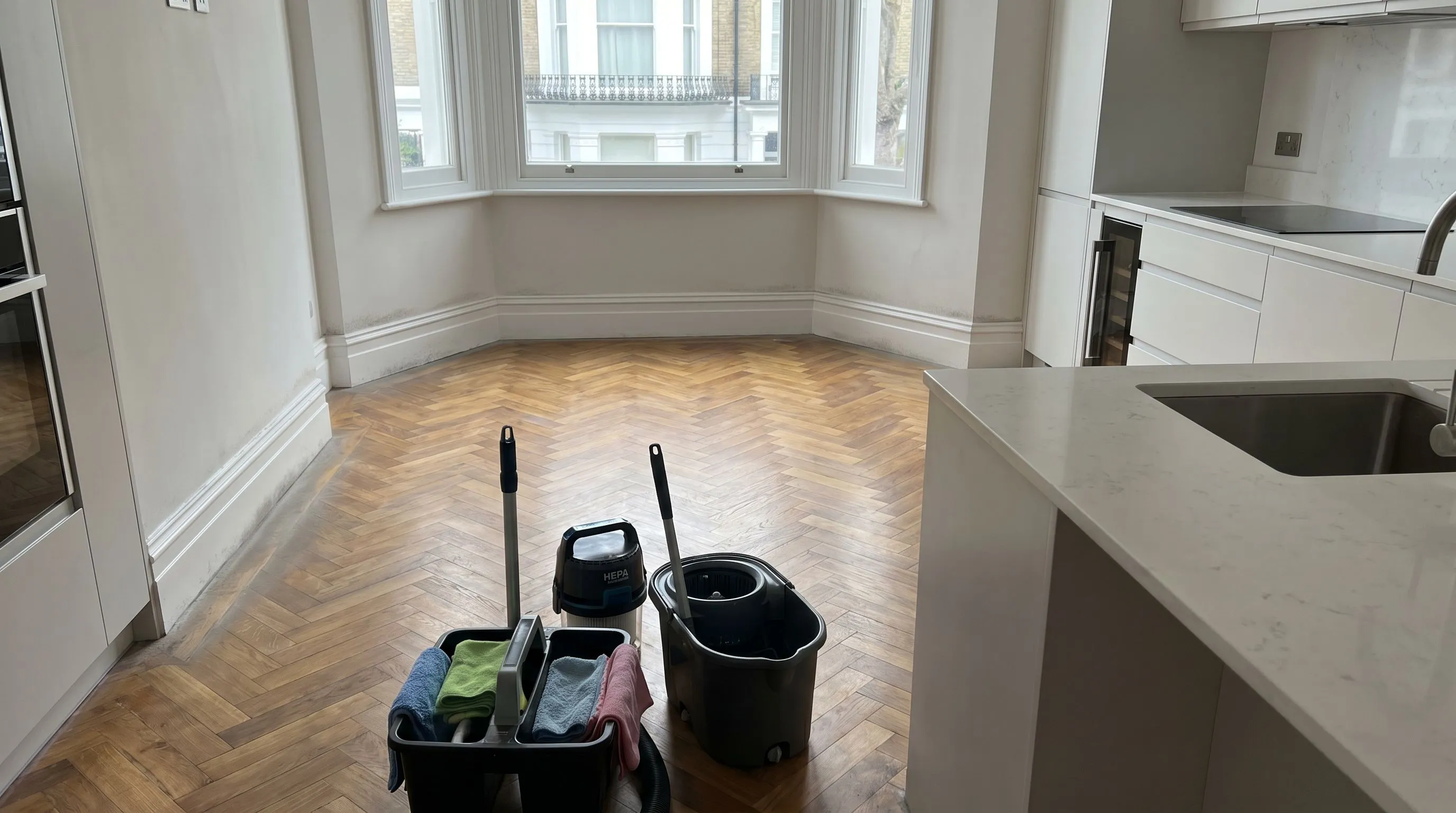
A standard wipe-down might be fine after decorating a modern flat. It is not enough after plastering, joinery, window repairs or structural works in a period conversion. Fine dust does not just sit on the worktops. It travels through stairwells, settles behind radiators, sticks to fresh paintwork and collects inside the channels of sash windows.
Islington Council lists many conservation areas across the borough, including Canonbury, Barnsbury, Clerkenwell Green, The Angel and Upper Street. In practical terms, that means many homes have older architectural details worth protecting.
The clean should be planned around those details, not rushed through as a final sweep.
Where Dust Hides in Islington Period Homes
Construction dust in older Islington homes behaves badly. The more decorative the property, the more places it has to hide.
The main dust traps we see are:
| Area | Why It Causes Problems | Cleaning Approach |
|---|---|---|
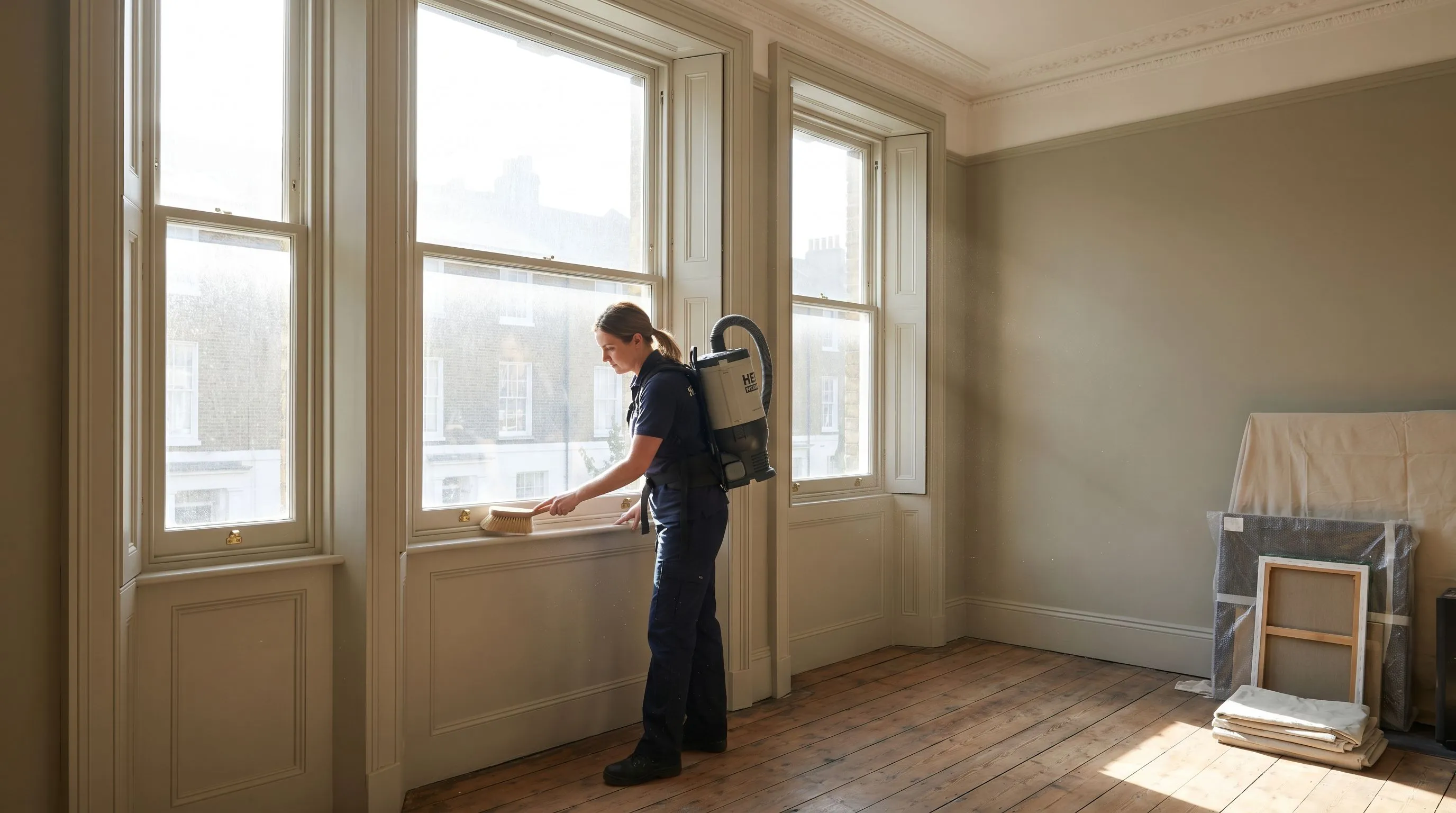
| Sash windows | Dust settles in tracks, pulleys, locks and catches | Dry HEPA extraction before careful detailing |
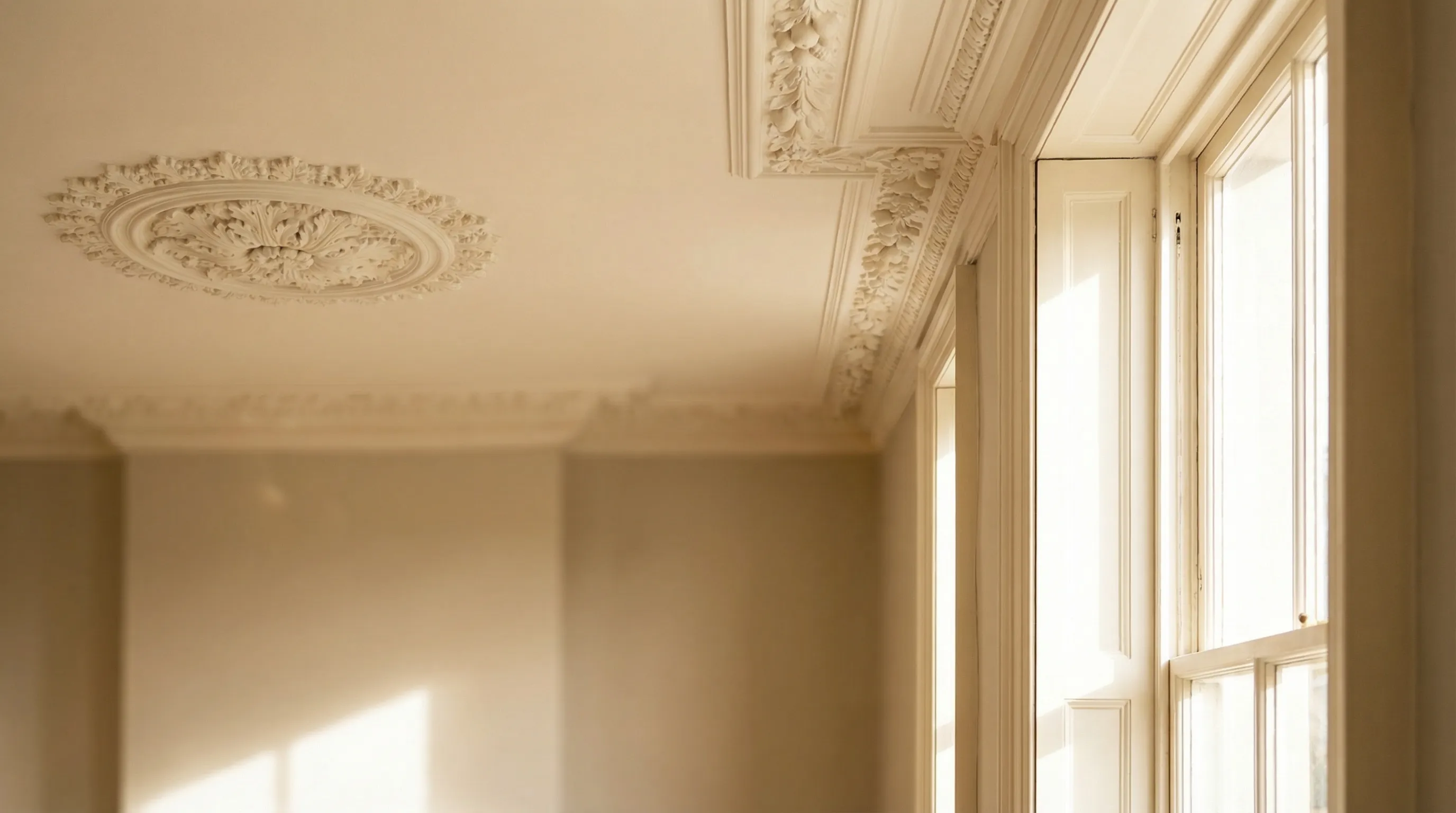
| Cornicing and ceiling roses | Fine plaster dust sits inside grooves and undercuts | Soft-brush agitation with narrow vacuum nozzles |
| Original radiators | Dust collects behind and between fins | Radiator brushes, HEPA vacuuming and damp finish |
| Timber floors | Grit scratches new sealant or old boards | Dry extraction before any mopping |
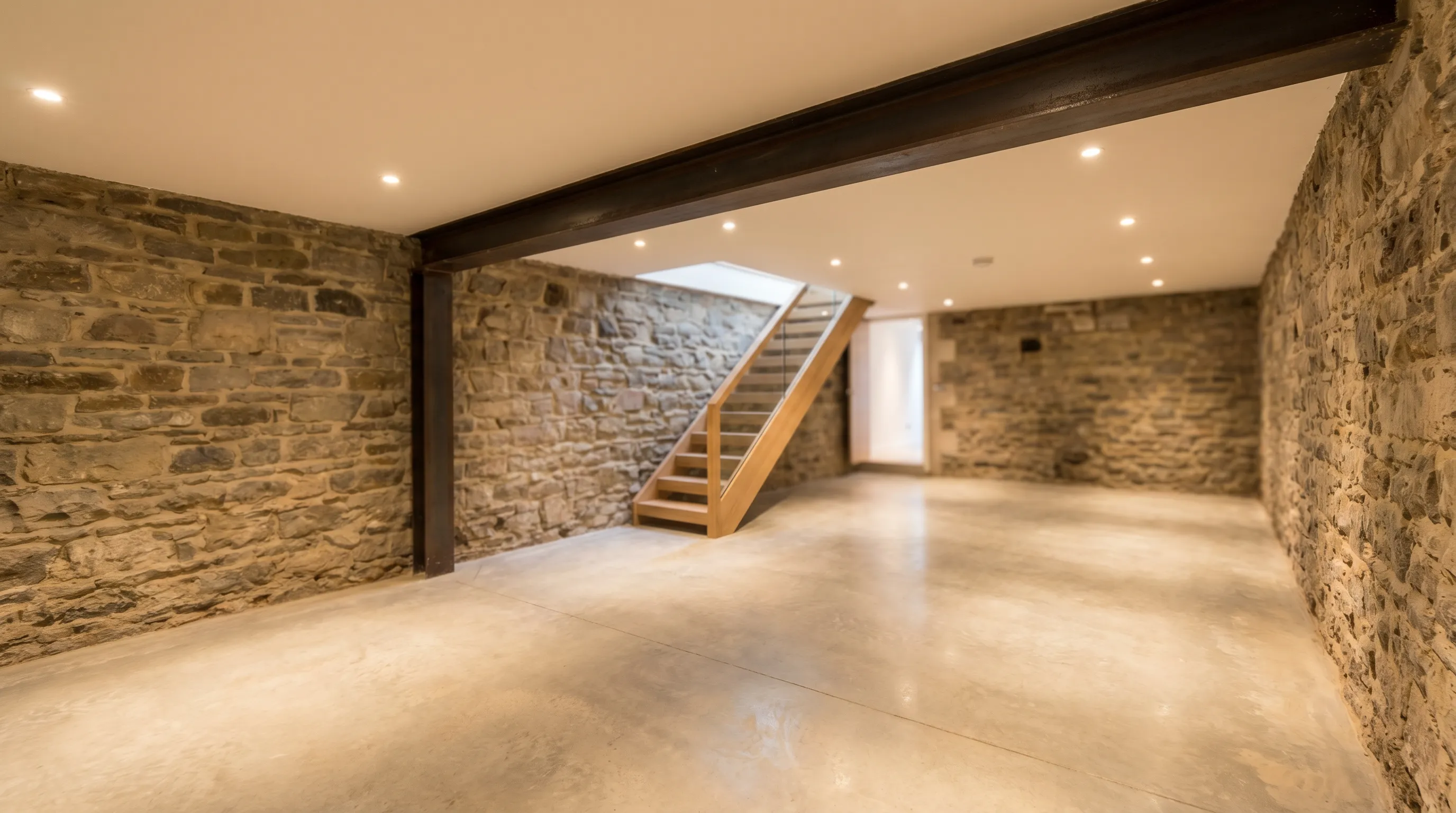
| Exposed brick | Powder clings to uneven surfaces | Gentle vacuuming, no aggressive scrubbing |
| Shared stairwells | Trades carry dust through communal areas | Protect, vacuum and wipe access routes |
The order matters. Dry removal first, wet cleaning second.
If you damp-wipe dusty cornicing or timber before removing the loose particles, you turn the dust into a paste and push it deeper into cracks and grain. That is how a "quick clean" becomes a much longer correction job.
For a deeper look at the health side of this, see our guide to the hidden dangers of construction dust.
What to Check Before the Cleaning Team Arrives
The best time to plan the clean is before the builders leave, not after you notice the dust under daylight.
Before booking, check these five things:
- Are all dusty trades finished? Sanding, chasing, cutting, plastering and tiling should be complete.
- Has snagging been scheduled? If decorators are returning, you may need a builders clean first and a lighter sparkle clean later.
- Are utilities working? Water and electricity are needed for a proper clean.
- Is waste removal agreed? Cleaning teams can remove light debris, but larger construction waste should be handled by the contractor or a licensed carrier.
- Are access rules clear? Flats and converted houses may have working-hour limits, porter rules or shared entrance requirements.
This is especially important in Islington flats and maisonettes. A cleaner arriving with industrial equipment and no access plan wastes time, annoys neighbours and can delay handover.
If your property sits on a controlled parking street, confirm loading and parking arrangements as well. Carrying HEPA vacuums and floor equipment from several streets away adds time that could have been spent cleaning.
Cleaning Around Original Features
Original features need slower cleaning, not harsher products.
That sounds obvious, but it is where a lot of damage happens. Someone sees paint flecks on old brass, plaster dust on timber, or haze on encaustic tiles and reaches for a strong cleaner or scraper. The surface might look better for five minutes. Then the dull patch appears.
Here is how we approach common Islington period details:
Sash Windows
Sash windows need particular care after sanding, decorating or glazing work. Dust sits in the channels, paint gathers around catches, and adhesive residue can remain on new glass.
We remove loose dust first, then detail the locks, frames and sills. Scrapers only belong on suitable glass, never near period timber or brass hardware.
Cornicing and Ceiling Roses
Decorative plasterwork should be dry-cleaned before any damp cloth touches it. Soft brushes loosen dust from the detail while a HEPA vacuum captures it.
The aim is extraction, not smearing.
Timber Floors and Stairs
Freshly finished boards are vulnerable to grit. Even a small amount of plaster or brick dust can act like sandpaper under a mop.
We vacuum slowly, including edges and stair nosings, before using the right damp method for the finish. Oiled timber, lacquered boards and old pine do not all want the same product.
Stairs deserve extra attention if your project went upwards. Loft builds send dust down through every landing, which is why we cover them separately in our guide to loft conversion cleaning in Islington.
Exposed Brick and Fireplaces
Islington conversions often include exposed brick or restored fireplace openings. These surfaces hold dust in texture, so wiping alone does very little.
The safest approach is gentle dry extraction first, then minimal moisture if the surface and pointing can tolerate it.
Shared Entrances, Flats and Managed Buildings
Many Islington renovations happen in converted houses, mansion-style blocks or flats above commercial units. The job is not finished if the private flat is clean but the shared entrance still has plaster dust on the stairs.
For managed or shared buildings, agree the boundaries upfront:
- Does the clean include the communal hallway immediately outside the flat?
- Are stair treads, banisters and landings included?
- Can equipment be left in the hallway while the team works?
- Are there restricted hours for noise or contractor access?
- Does the managing agent require insurance documents before attendance?
This matters because construction dust migrates. If the route from the front door to the flat is dirty, the finished space will be re-contaminated the first time furniture, cleaners or residents walk through.
For larger projects, we often clean access routes at the end of each day and then do a final detail once the main property is complete.
When Should You Book the Clean?
Book the clean after the main dusty works are complete, but before furniture, curtains and soft furnishings are moved back in. For most Islington renovations, that means arranging the clean for the window between final snagging and occupation.
The usual sequence looks like this:
| Stage | What Happens | Cleaning Need |
|---|---|---|
| Main works | Cutting, plastering, carpentry, tiling | Keep areas safe, do not do final cleaning yet |
| First fix/second fix finishing | Fixtures, decoration, flooring | Plan the clean and confirm access |
| Snagging | Builders correct defects | Builders clean may be useful before inspection |
| Final handover | Property ready for photos, move-in or letting | Detailed post-renovation clean |
| After move-in | Furniture and soft furnishings arrive | Light touch-up if needed |
If you only have budget for one professional clean, wait until the dusty trades have finished. Cleaning too early feels productive, but it usually means paying twice.
There are exceptions. If the site has heavy dust or family members need to visit during the works, an interim safety clean can make sense. That is different from the final handover clean.
Common Mistakes to Avoid
The same problems come up again and again after conservation-area renovation work.
Using a domestic vacuum on plaster dust. Standard filters clog quickly and can blow fine particles back into the air. Use HEPA filtration designed for fine dust.
Mopping before vacuuming. Wet cleaning loose construction dust creates streaks and residue. Dry extraction comes first.
Scraping period details. Blades can damage timber, brass, stone and old paint finishes. Use the least aggressive method that works.
Forgetting high surfaces. Tops of doors, picture rails, kitchen units and tall window frames often hold the dust that later "mysteriously" reappears.
Ignoring communal routes. In flats and converted houses, the hallway can undo the clean if it remains dusty.
Moving furniture back too soon. Soft furnishings trap dust. Get the construction residue dealt with before sofas, rugs and curtains return.
Islington Renovation Cleaning Checklist
Use this as a final sense-check before handover:
- HEPA vacuum all floors, edges, skirting boards and stair nosings
- Clean sash window tracks, catches, sills and frames
- Detail cornicing, ceiling roses, picture rails and high ledges
- Remove dust from radiators, including behind and between fins
- Clean inside cupboards, wardrobes and fitted joinery
- Remove adhesive, labels and paint spots from suitable glass
- Wipe sockets, switches, door handles and hardware
- Clean bathrooms for grout haze, sealant residue and chrome marks
- Clean kitchen units internally and externally before use
- Vacuum and wipe the immediate shared access route where agreed
- Check the property again in natural daylight before sign-off
No checklist replaces judgement. A Georgian townhouse in Canonbury, a warehouse conversion near Clerkenwell and a flat off Upper Street will each need slightly different attention.
That is the point of a proper post-renovation clean: not just making the place look tidy, but removing the residue that makes a finished project feel unfinished.
Need help after renovation work in Islington?
Our CSCS-certified teams clean period homes, flats, conversions and refurbished properties across N1, EC1 and nearby areas. Request a quote with your project details, access notes and target handover date.
Last updated: May 2026.