Basement Extension Cleaning in Chelsea: What to Expect After Your Dig
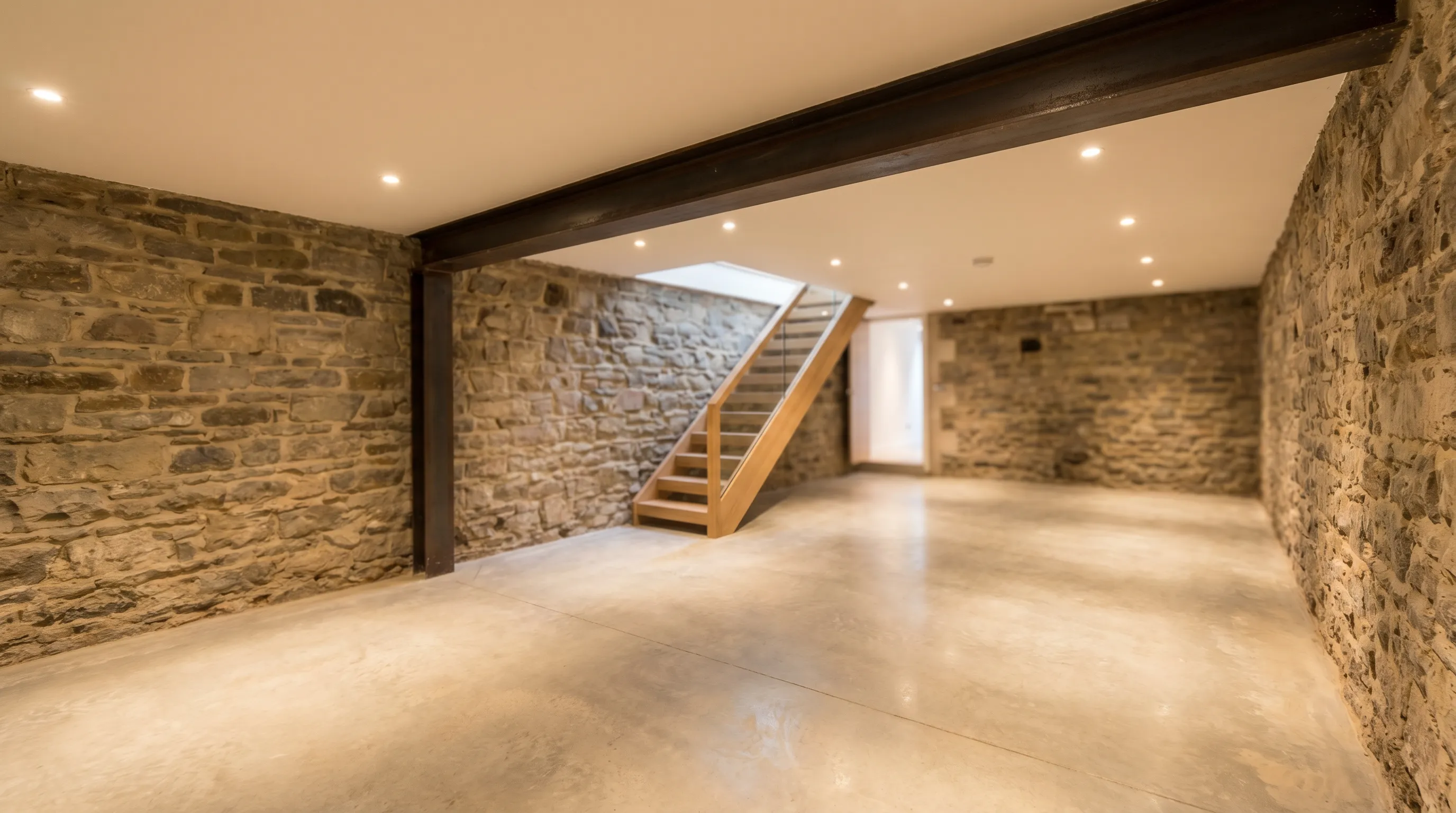
You've spent 12-18 months on a basement extension. Planning permission from RBKC. Party wall agreements with your neighbours. Months of excavation, waterproofing, and fit-out. Then the builders pack up and leave you with a property that looks more like a building site than a home.
Basement extensions are one of the most common — and most complex — renovation projects we deal with in Chelsea. We provide after builders cleaning in Chelsea and have seen first-hand how different a post-basement clean is from a standard renovation.
The dust is heavier. The chemical residue is different. And it's not just the basement that needs cleaning — it's your entire house, because fine particulate has migrated up through every floor.
Here's what actually happens after a basement dig in Chelsea, and why a generic builders clean won't cut it.
Table of Contents
- Why Chelsea Homeowners Are Digging Down
- How Basement Extension Dust Differs from Standard Renovation Dust
- The Cleaning Process for a Chelsea Basement Extension
- RBKC Waste Disposal for Basement Projects
- How Long Does It Take and What Does It Cost?
Why Chelsea Homeowners Are Digging Down
Chelsea has a space problem. You can't go up — RBKC's conservation area policies heavily restrict roof extensions and mansard conversions, particularly in the Chelsea CA, Hans Town CA, and Thames CA. You can't easily go sideways — lot sizes are fixed and boundary walls are often listed.
So you go down. RBKC's Basement Planning Policy CL7 allows single-storey basement extensions under specific conditions, and plenty of Chelsea homeowners take advantage of it.
What are they building?
- Home gyms with rubber flooring and mirrored walls
- Cinema rooms with acoustic treatments and projector installations
- Wine cellars with climate control and bespoke racking
- Additional bedrooms with ensuites and full glazing to lightwells
- Playrooms and family spaces with underfloor heating
These aren't small projects. A typical Chelsea basement dig involves 60-120 tonnes of excavated soil, full structural underpinning, specialist waterproofing (the Thames water table sits higher than many people realise), and multiple trades over six to twelve months.
The clean-up reflects that complexity.
How Basement Extension Dust Differs from Standard Renovation Dust
This is the bit most homeowners don't see coming. They assume a basement dig generates the same kind of mess as a loft conversion or kitchen refurb. It doesn't.
Here's the difference:
| Dust Type | Standard Renovation | Basement Extension |
|---|---|---|
| Primary source | Plaster, gypsum, sawdust | Concrete cutting, masonry grinding, excavation |
| Particle weight | Light, airborne | Heavy, abrasive, settles fast then redistributes |
| Silica content | Low to moderate | High — concrete and masonry dust are major silica sources |
| Chemical residue | Paint, adhesive | Tanking membranes, waterproofing chemicals, curing compounds |
| Distribution | Contained to work area | Migrates up through stairwells to every floor |
| Health risk | Moderate | High (silica dust is HSE-classified) |
The silica dust health risks are particularly serious on basement projects. Concrete cutting, masonry work, and excavation all generate respirable crystalline silica — 100 times smaller than a grain of sand, and capable of causing silicosis, COPD, and lung cancer with prolonged exposure.
A domestic vacuum won't just fail to capture this dust — it will actively redistribute it. Standard filters let silica particles pass straight through the motor and out of the exhaust, at face height.
The Cleaning Process for a Chelsea Basement Extension
A basement extension clean is not one job — it's a phased process across the entire property. Here's how we typically structure it:
Site survey and sealing. We walk the whole property before starting. Dust migration paths get identified (stairwells, doorways, risers), and we seal off finished areas to prevent re-contamination during the clean.
Heavy debris removal at the basement level. Offcuts, packaging, protective sheeting, loose rubble, tanking membrane offcuts. This is the bulk clearance that makes detailed cleaning possible.
Dry HEPA extraction — bottom up. Industrial HEPA vacuums pull fine particulate from every surface, starting at the basement and working up floor by floor. Damp wiping comes later. Wipe first and you push silica into grain and joints.
Waterproofing residue treatment. New tanking membranes and cementitious waterproofing leave chemical residue on adjacent surfaces. We use dedicated masonry-safe cleaners to remove this without damaging new finishes.
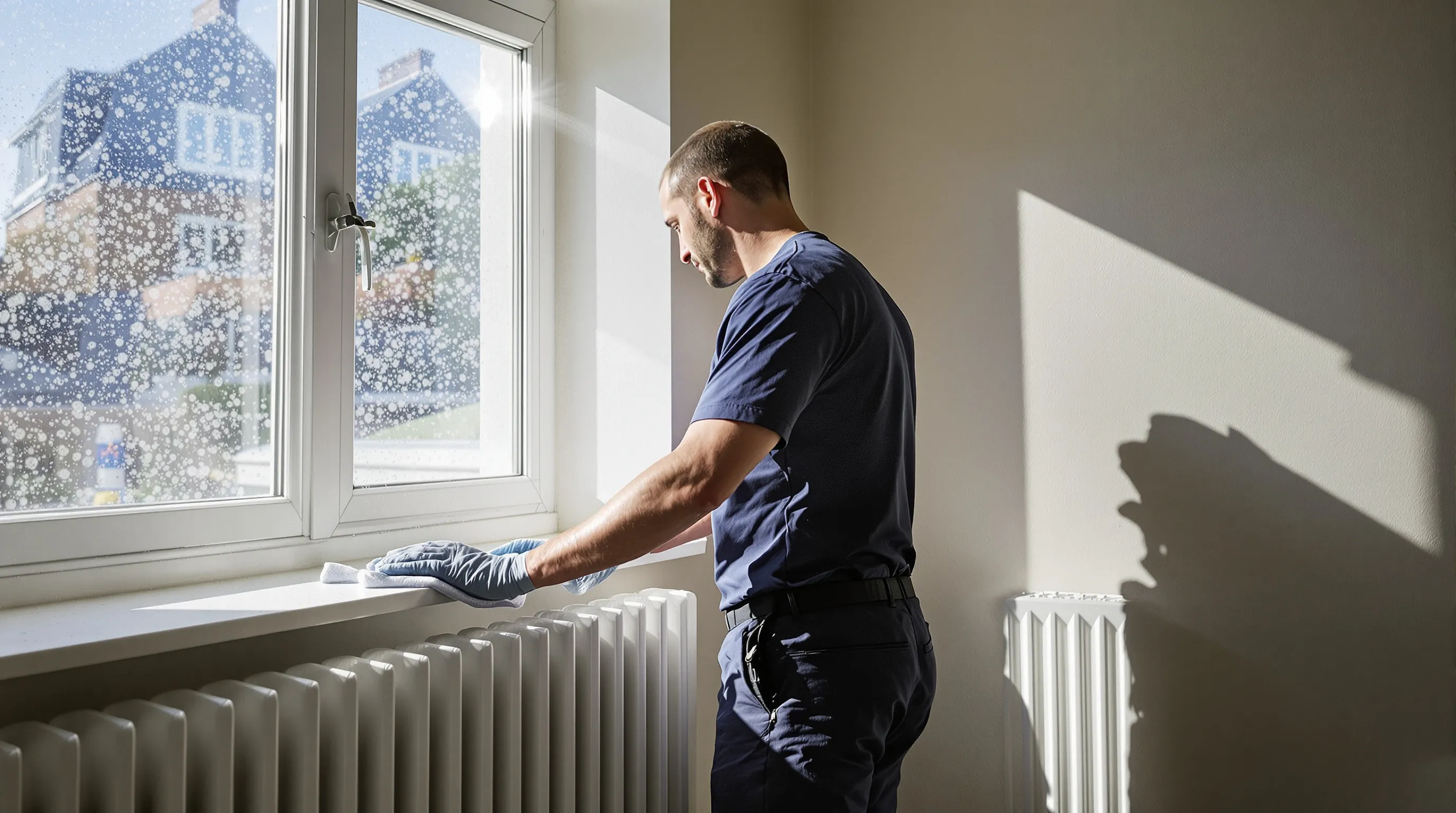
Floor-by-floor detailed clean. Every room above the basement gets treated as if the dig happened there. Skirting boards, radiators, window sills, door frames, stair edges — all the dust traps that would otherwise recontaminate the basement within a week.
Final detailing in the basement itself. New concrete floors polished or sealed (depending on finish), lightwells cleaned, glazing de-hazed, joinery de-smudged, bathroom and utility fittings polished.
Handover walkthrough under natural light. We don't sign off a basement clean under artificial lighting — daylight shows haze, streaks, and dust that site lighting hides.
For comparison, see how we approached a multi-floor 4-floor handover clean at Cresswell Place — the sequencing principles are the same, scaled to basement-specific challenges.
RBKC Waste Disposal for Basement Projects
Basement extensions generate more construction waste than almost any other domestic project — and RBKC has strict rules about how it can be disposed of.
What you need to know:
- Clear Streets time-banding applies across much of Chelsea. Construction waste can only be presented on pavements during specific time windows — typically a 2-hour maximum presentation period before collection.
- Smugglers Way limits. RBKC's household waste centre caps DIY and construction waste at ~100L per visit or one item under 2m x 0.75m x 0.7m. Large basement spoil must go via a licensed commercial waste carrier.
- Skip permits in conservation areas take 3-7 working days to arrange and require insurance documentation. Skips can't block protected sightlines or highway features.
- Evidence requirements. RBKC enforcement officers can request waste carrier documentation on any construction project. We provide this as part of our service.
Non-compliance with RBKC waste rules carries fines from £300 upwards. For a basement project, this matters — enforcement officers actively patrol conservation areas and flag violations fast.
How Long Does It Take and What Does It Cost?
A basement extension clean takes longer and costs more than a standard renovation clean. That's just reality.
The factors that affect pricing:
| Factor | Impact on Cost |
|---|---|
| Total property size | Bigger = more floors to clean, not just the basement |
| Basement specification | Wine cellar vs home gym vs cinema — different finishes need different approaches |
| Access | Street parking, lift availability, congestion zone |
| Timeline | Same-week turnaround commands a premium over 2-week lead time |
| Scope inclusions | Internal only vs internal + external glazing + lightwells |
| Waste volume | Residual construction debris affects skip/carrier costs |
Typical timeline for a Chelsea basement clean:
- Small basement (gym or cinema, under 30sqm): 1-2 days with a team of 3-4 cleaners
- Medium basement (full floor with ensuite, 30-60sqm): 2-3 days with a team of 4-5 cleaners
- Large basement (multi-zone, 60sqm+): 3-5 days with a team of 5-6 cleaners
The basement itself is only part of the scope. Plan for the cleaning team to work through every floor of your house, not just below ground.
For detailed pricing context across London boroughs, see our London pricing guide. Chelsea projects typically sit at the upper end of the range, due to the complexity factors covered above. For general period property considerations that also apply to basement projects, see our guide to after builders cleaning for period properties in Chelsea.
Just finished a basement extension in Chelsea?
We've cleaned basement projects across SW3, SW10, and SW1 — from compact wine cellars to multi-zone family basements. Our teams are CSCS-certified, fully insured, and equipped with industrial HEPA extraction suitable for post-concrete work.
Request a quote or call us on 0208 058 2037. For an accurate quote, have your basement size, property floor count, and target handover date ready.
Last updated: April 2026.