End of Tenancy Cleaning Checklist London: Move-Out Guide
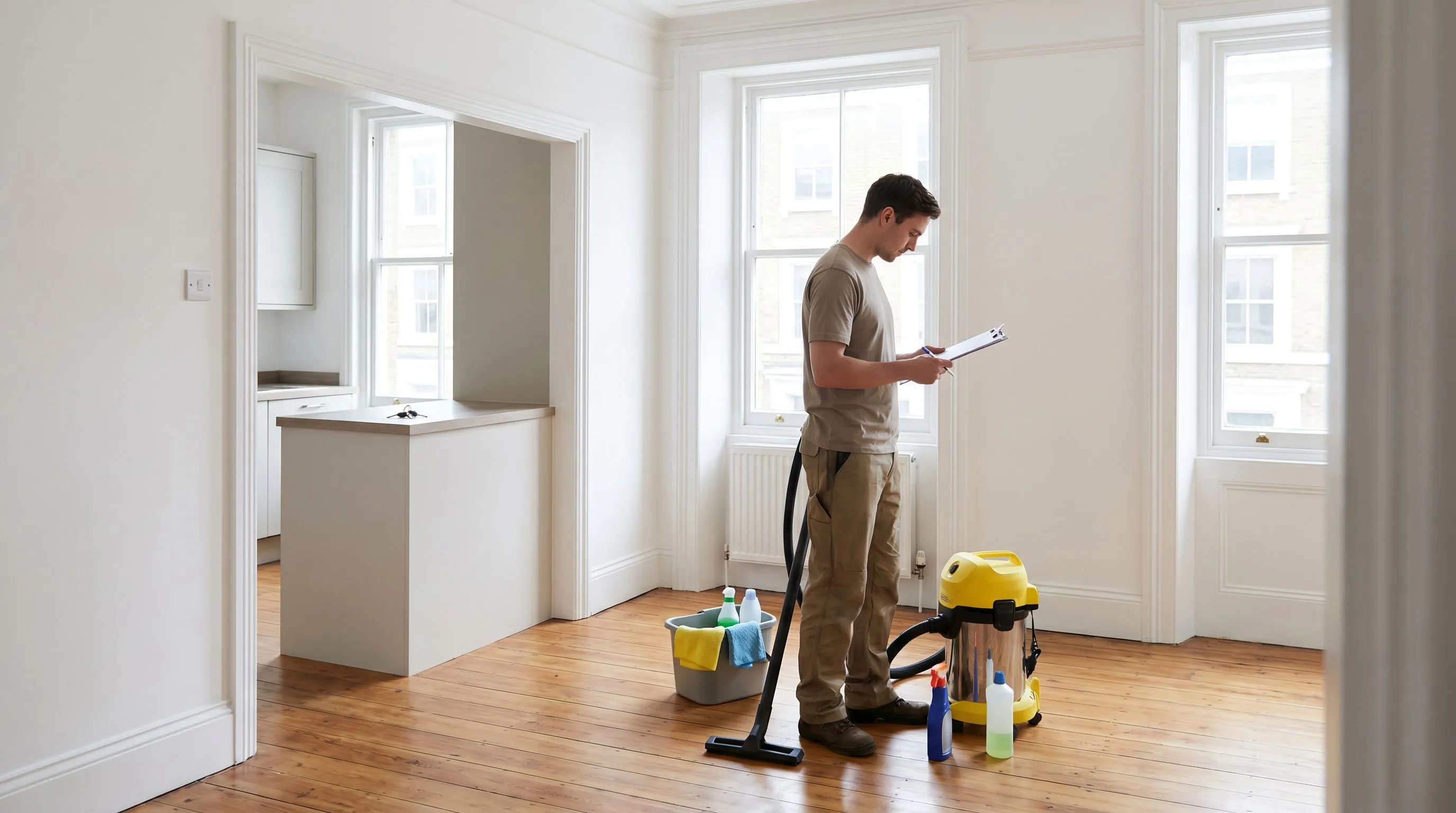
End of tenancy cleaning checklist London searches usually come from the same stressful moment: the move is nearly done, the keys are due back, and the final inventory inspection is suddenly very real.
The aim is simple. The property should be returned to the same cleaning standard recorded at check-in, with clear evidence if anything is disputed.
If you want the service rather than the checklist, our team provides end of tenancy cleaning London for tenants, landlords, agents and property managers. This guide is the practical planning version: what to clean, when to clean it, and what London check-outs often pick up.
Table of Contents
- What Is End of Tenancy Cleaning?
- The London Move-Out Timeline
- End of Tenancy Cleaning Checklist by Room
- Kitchen Checklist
- Bathroom Checklist
- Bedrooms, Living Rooms and Hallways
- Deposits, Inventories and Fair Cleaning Standards
- Should You Clean Yourself or Book Professionals?
- Common London Check-Out Problems
- End of Tenancy Cleaning FAQs
What Is End of Tenancy Cleaning?
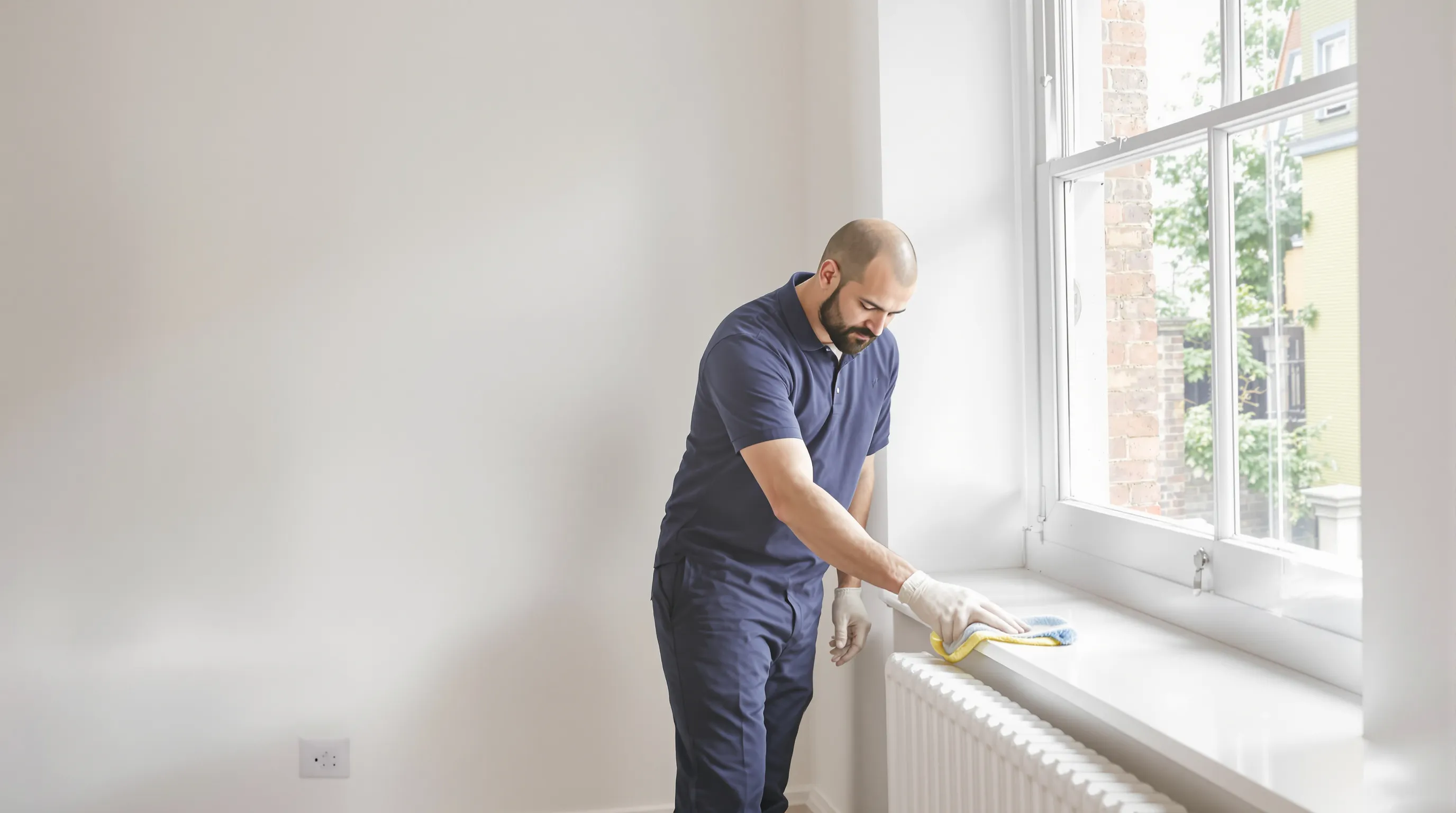
End of tenancy cleaning is the deep clean carried out before a rented property is handed back to the landlord, agent or inventory clerk. It covers the areas normal weekly cleaning misses: oven grease, limescale, cupboard interiors, skirting boards, extractor fans, window frames, sockets, doors and floors.
It is not about making an old property brand new. It is about matching the cleanliness standard recorded at the start of the tenancy.
That distinction matters because London rentals vary wildly. A studio in a new development, a furnished mansion block flat and a shared Victorian house can all need a different level of work before check-out.
The inventory is the anchor. If the check-in report says the oven was professionally cleaned, the oven needs to be returned to that standard. If the report says the windows were marked at the start, the tenant should not be expected to make them better than they were.
The London Move-Out Timeline
A smooth London check-out usually starts before moving day. Waiting until the van is outside, the cleaner is delayed and the agent is asking for keys is how small cleaning issues turn into deposit arguments.
Use this timeline as a working plan.
| When | What to do | Why it matters |
|---|---|---|
| 2 weeks before check-out | Read the check-in inventory, tenancy agreement and agent cleaning notes. | This tells you the standard you need to match. |
| 7 days before | Book cleaners, carpet cleaning, oven cleaning or waste removal if needed. | London slots fill quickly, especially at month-end. |
| 3 days before | Defrost the freezer, remove food, empty cupboards and deal with bulky rubbish. | Cleaners cannot properly clean around belongings. |
| 24-48 hours before | Complete the deep clean once furniture and boxes are mostly out. | This gives time for touch-ups and drying. |
| Before key return | Photograph each room, appliance, bathroom and any pre-existing damage. | Evidence matters if there is a deposit dispute. |
The awkward part is timing. Clean too early and the move creates new dirt. Clean too late and there is no time to fix anything before the inventory clerk arrives.
For most London flats, the best window is after the property is empty and within 24 hours of check-out. If carpets or upholstery are being cleaned, allow drying time before inspection.
End of Tenancy Cleaning Checklist by Room
A proper end of tenancy clean works from high to low, dry to wet, and room to room. Dust ceilings, fittings and high shelves first, then clean surfaces, then floors last.
Do not start with the mop. If you wet-clean before dusting, you drag dirt around the property and leave marks on skirting, corners and floor edges.
Whole-property tasks
- Remove cobwebs from ceilings, corners and light fittings
- Dust curtain rails, blinds, picture rails and high shelves
- Wipe doors, handles, frames, skirting boards and architraves
- Clean light switches, plug sockets and thermostats carefully
- Clean internal windows, frames, tracks and sills
- Empty and wipe all cupboards, drawers and wardrobes
- Vacuum carpets, rugs and soft furnishings
- Sweep and mop hard floors
- Remove rubbish, food, packaging and personal items
- Check behind movable furniture and freestanding appliances
This is where many rushed cleans fail. Inventory clerks often check the top of doors, inside wardrobes, window tracks and the edges of floors because these areas show whether the clean was genuinely thorough.
Kitchen Checklist
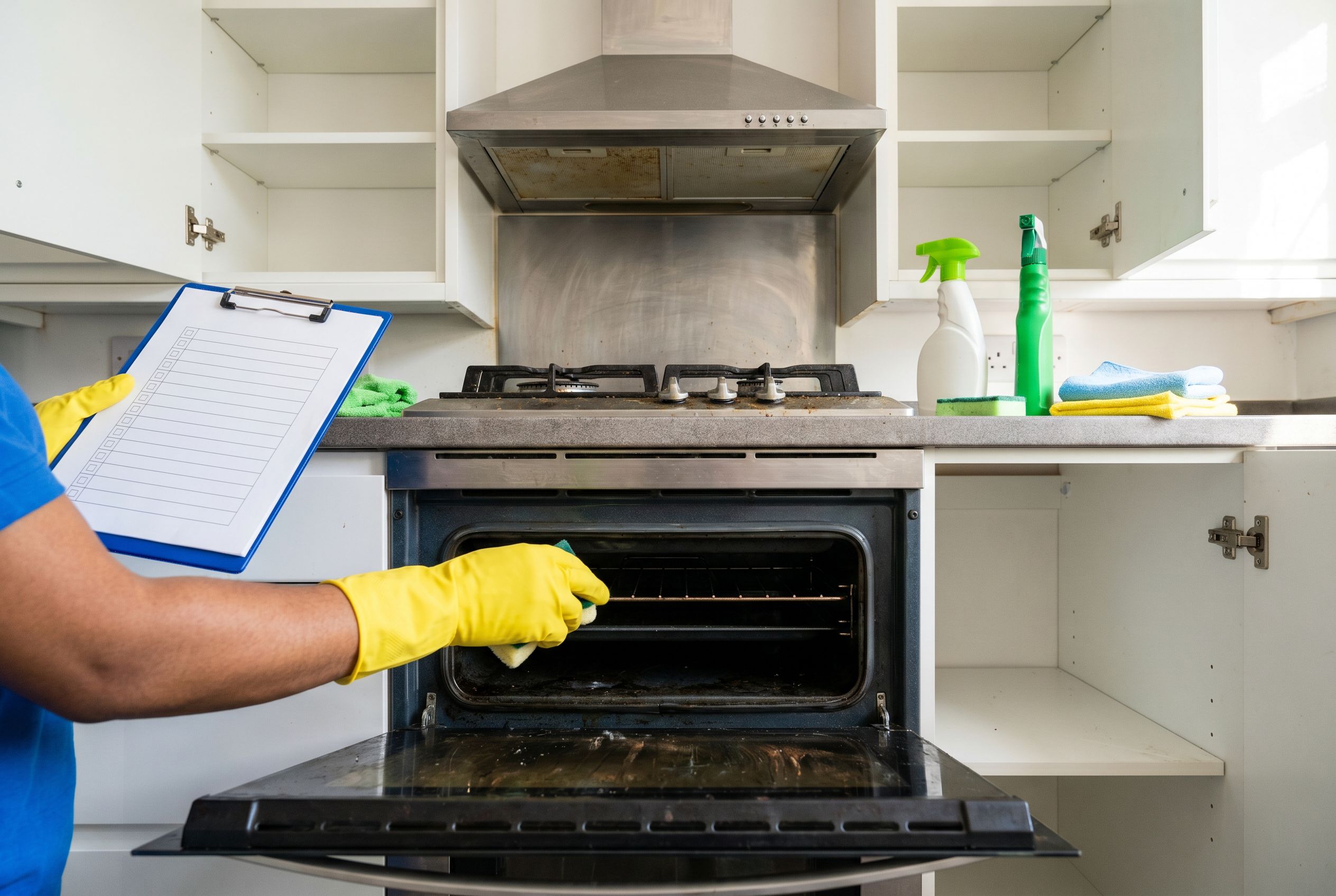
The kitchen is usually the highest-risk room at check-out. Grease, crumbs, limescale and food residue are easy to photograph and often lead to cleaning deductions.
Work through it slowly.
Appliances
- Degrease the oven, trays, racks, door glass and seals
- Clean the hob, burner rings, controls and splashback
- Degrease the extractor hood and washable filters
- Empty, defrost and clean the fridge and freezer
- Clean the dishwasher filter, seal, door edge and detergent drawer
- Clean the washing machine seal, drawer, drum and exterior
- Wipe the microwave inside and out
- Descale kettles if they were supplied with the tenancy
Cupboards, surfaces and sink
- Empty all cupboards and drawers
- Vacuum crumbs before wiping interiors
- Clean doors, handles, hinges and top edges
- Wipe worktops and splashbacks
- Clean under the sink and around pipework
- Descale taps, plugs and draining boards
- Empty, clean and disinfect bins
- Mop the floor last, including edges and corners
Oven cleaning deserves its own note. If the check-in inventory shows a clean oven and the check-out shows baked-on grease, that is one of the easiest deductions for a landlord or agent to justify.
Bathroom Checklist
Bathrooms fail inspection for three main reasons: limescale, mould and missed edges. London hard water makes this worse, especially around taps, shower screens and toilet bowls.
Main bathroom tasks
- Descale taps, shower heads, screens and plugs
- Clean the bath, shower tray, basin and toilet
- Remove soap scum from glass and tiles
- Clean grout lines and visible mould where possible
- Polish mirrors and chrome fittings
- Clean extractor fans and vents
- Wipe cabinets inside and out
- Clean towel rails, radiators and toilet roll holders
- Wash the floor, including behind the toilet
- Empty bins and remove toiletries
Some stains will not come out with cleaning alone. Heavy mould in silicone, damaged grout, rust marks and worn enamel may be maintenance issues rather than cleaning issues.
Photograph anything that was already present at check-in. Cleaning and damage are different conversations, but they often get blurred during a rushed check-out.
Bedrooms, Living Rooms and Hallways
These rooms look simple, but they are where dust and hidden marks show up. Empty rooms make every missed skirting board and window sill more obvious.
Bedrooms
- Clean wardrobes, drawers and shelves inside and out
- Dust curtain rails, blinds and light fittings
- Vacuum mattresses if supplied
- Move and clean behind freestanding furniture where safe
- Wipe mirrors, sockets, switches and handles
- Vacuum carpets slowly, including edges
Living rooms
- Vacuum under sofa cushions if furniture is supplied
- Dust shelving, TV units and tables
- Wipe window sills, frames and internal glass
- Clean marks from doors and handles
- Mop hard floors or vacuum carpets
Hallways and stairs
- Vacuum stair edges and landings
- Clean banisters, rails and spindles
- Wipe front door interior, handles and locks
- Remove scuffs where they can be cleaned without damaging paint
- Check entry mats, storage cupboards and meter cupboards
Hallways matter because every box, suitcase and furniture item passes through them on moving day. Plan to do a final pass after the removal van has gone.
Deposits, Inventories and Fair Cleaning Standards
The cleaning standard is judged against the check-in evidence, not against someone else's idea of perfect. That is why inventories, photos and dated reports are so important.
Total Landlord Insurance, citing mydeposits data, reports cleaning as a major cause of deposit resolution cases. Their end of tenancy cleaning and inventory checklist also stresses the importance of comparing check-in and check-out evidence.
There is also a legal point worth knowing. GOV.UK explains that the Tenant Fees Act bans most tenant fees and lists the permitted payments landlords and letting agents can charge in England.
In practice, a landlord or agent should not require a tenant to pay for professional cleaning as a fixed fee simply because the tenancy is ending. The relevant question is whether the property has been returned to the same level of cleanliness recorded at the start.
That does not mean cleaning can be ignored. If the property is returned dirtier than it was at check-in, cleaning deductions may still be proposed.
The safest approach is evidence-led:
- Keep the check-in inventory handy while cleaning
- Photograph cleaned appliances, bathrooms, floors and windows
- Keep receipts for any professional cleaning you choose to book
- Report maintenance issues separately from cleaning
- Do a final walk-through before handing back keys
Should You Clean Yourself or Book Professionals?
You can clean the property yourself if you can reach the required standard. Professional cleaning is a practical choice, not an automatic legal requirement.
The question is whether you have the time, equipment and patience to deal with the areas most likely to fail.
| Situation | DIY may be enough | Professional help is usually safer |
|---|---|---|
| Small unfurnished flat | Light use, good weekly cleaning, no carpets | Greasy oven, limescale, heavy marks |
| Furnished property | Minimal furniture and clean upholstery | Sofas, mattresses, rugs and lots of storage |
| Family house share | Clear room ownership and time to clean | Shared kitchens, bathrooms and hallway wear |
| Carpeted property | Clean carpets with no odours or stains | Pet smells, traffic marks, stains or agent request |
| Tight deadline | Several days before check-out | Same-day key return or month-end move |
Our honest view: kitchens, bathrooms and carpets are where professional cleaners usually earn their keep. They have the products, equipment and routine to work through stubborn areas without damaging surfaces.
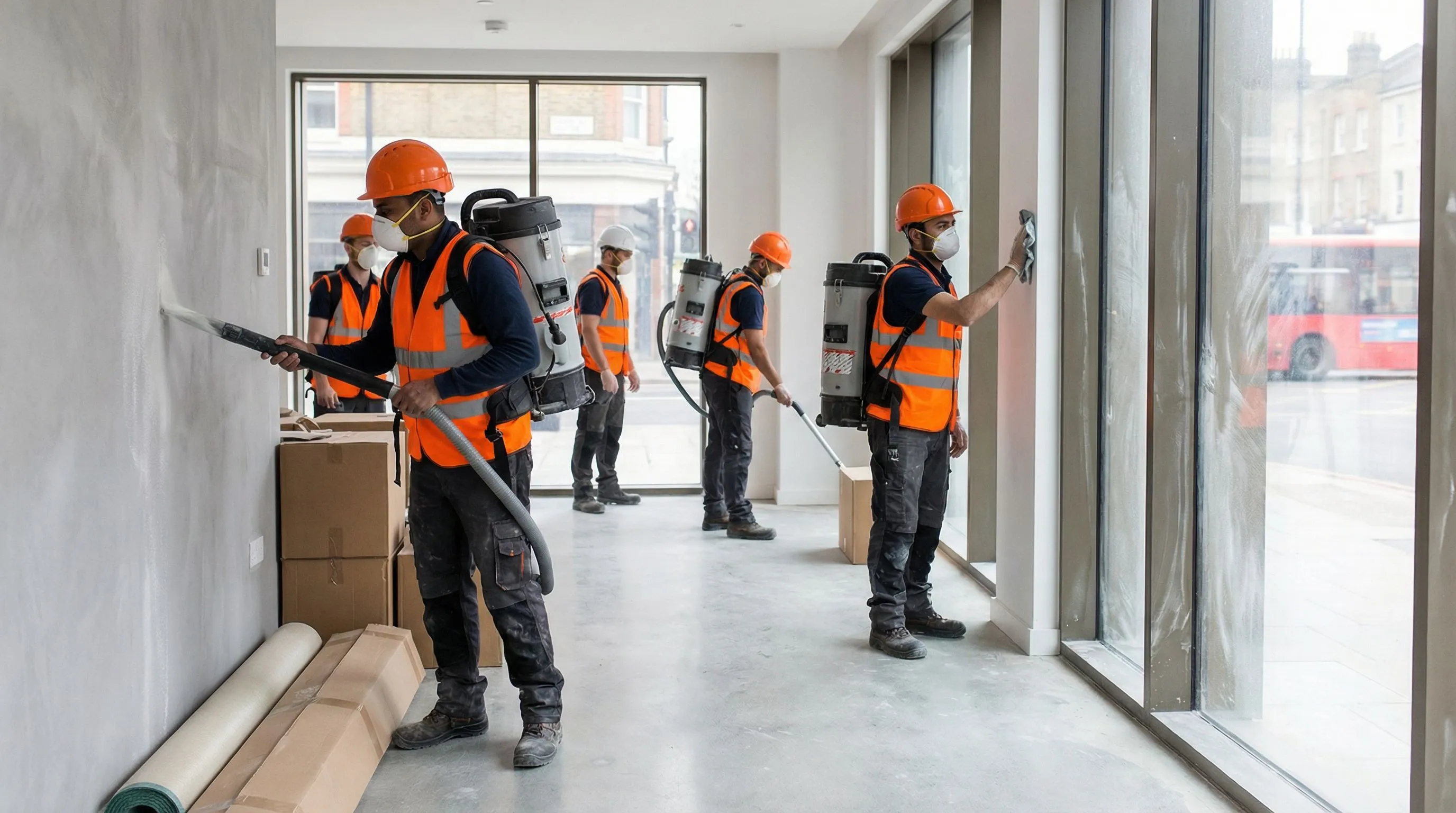
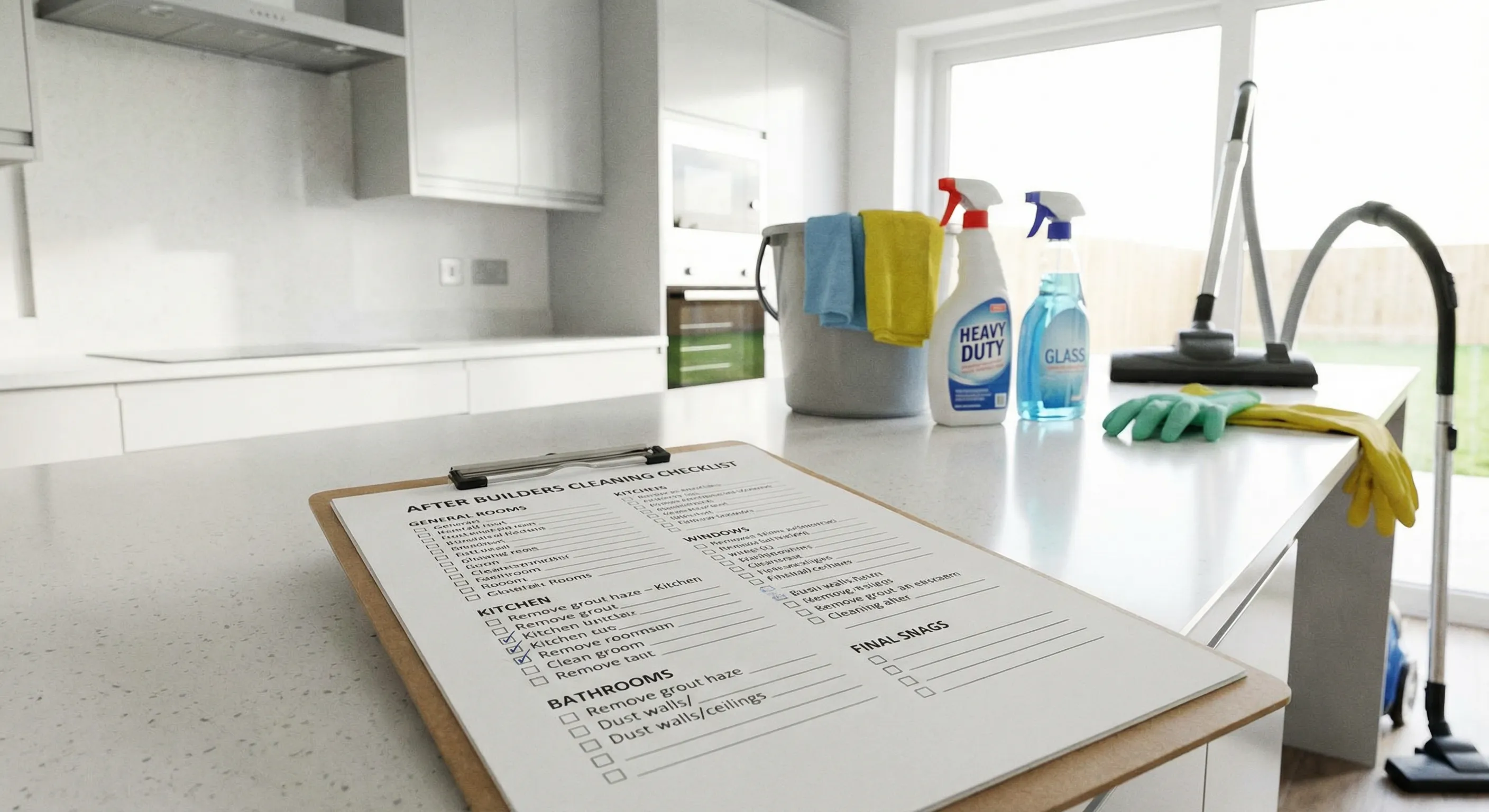
For more general deep-clean planning, our after builders cleaning checklist shows how we structure detailed room-by-room cleans after heavier property work.
Landlords refurbishing between tenancies have a different sequencing problem entirely. Our guide to end of tenancy cleaning in Fulham after a refurbishment explains how to stage the builders clean and the final check-in standard clean.
Common London Check-Out Problems
London move-outs add a few problems that do not always show up in generic checklists. They are boring, practical issues, which is exactly why they cause trouble.
Parking and access
Cleaners may need parking for equipment, especially if carpet cleaning or oven cleaning is included. In controlled parking zones, visitor permits and loading rules should be sorted before the team arrives.
If the property is in a mansion block or high-rise, check lift access and concierge rules. Some buildings require move-out slots or contractor sign-in.
Rubbish and bulky waste
Cleaners are not usually waste removal contractors. If there are bags of rubbish, old furniture, broken appliances or leftover items, arrange disposal before cleaning day.
This matters because a property cannot be properly cleaned while belongings are still in cupboards, rooms or hallways.
Freezers not defrosted
A freezer needs to be empty and defrosted before it can be cleaned properly. If it is still packed with ice on the day, the cleaner cannot finish that part of the job.
Start this at least 24 hours before the clean and put towels down to avoid water damage.
Damp, mould and ventilation
Light surface mould can often be cleaned. Deep mould in silicone, recurring damp patches or blown plaster usually need maintenance attention.
Do not leave this until check-out day. Raise it early with the landlord or agent so it is recorded as a property issue, not simply a cleaning failure.
Last-minute snagging from moving day
Even a spotless property can pick up scuffs during removals. Keep basic cleaning supplies back until the end: cloths, mop, vacuum, bin bags, glass cleaner and a sponge.
Do a final pass once the flat is empty. It is annoying, but it is quicker than arguing over fresh marks later.
Final Check Before You Hand Back Keys
Walk the property as if you were the inventory clerk.
Open every cupboard. Look behind doors. Check taps, plugholes, oven glass, fridge seals, window tracks, skirting boards and the floor behind where furniture used to sit.
Then take photos in good light. Capture each room from the doorway, then take close-ups of kitchens, bathrooms, appliances, carpets, windows and any known issues.
If you want help getting the property ready for inspection, request a quote and send photos, the check-out deadline, property size and any agent cleaning notes. The more detail we have, the easier it is to plan the clean properly.
End of Tenancy Cleaning FAQs
What should be cleaned at the end of a tenancy in London?
Clean the property back to the standard recorded at check-in. That usually means kitchens, bathrooms, floors, windows, skirting boards, cupboards, appliances, bins, furniture, sockets, doors, handles and any outdoor or balcony areas included in the tenancy.
Can a London landlord require professional end of tenancy cleaning?
A landlord or agent cannot usually force a tenant to pay for professional cleaning as a fixed contract requirement. The key test is whether the property is returned to the same cleanliness standard as at the start of the tenancy.
When should end of tenancy cleaning be booked?
Book the clean after personal belongings have been removed and before the final inventory check-out. In London, allow extra time for parking, keys, lift bookings and drying time for carpets or upholstery.
Is oven cleaning included in end of tenancy cleaning?
Oven cleaning should be included in a proper end of tenancy clean because ovens are one of the most common inspection issues. Confirm whether hobs, extractor filters, trays and additional ovens are included before booking.