DIY vs Professional After Builders Cleaning: Is It Worth the Cost?
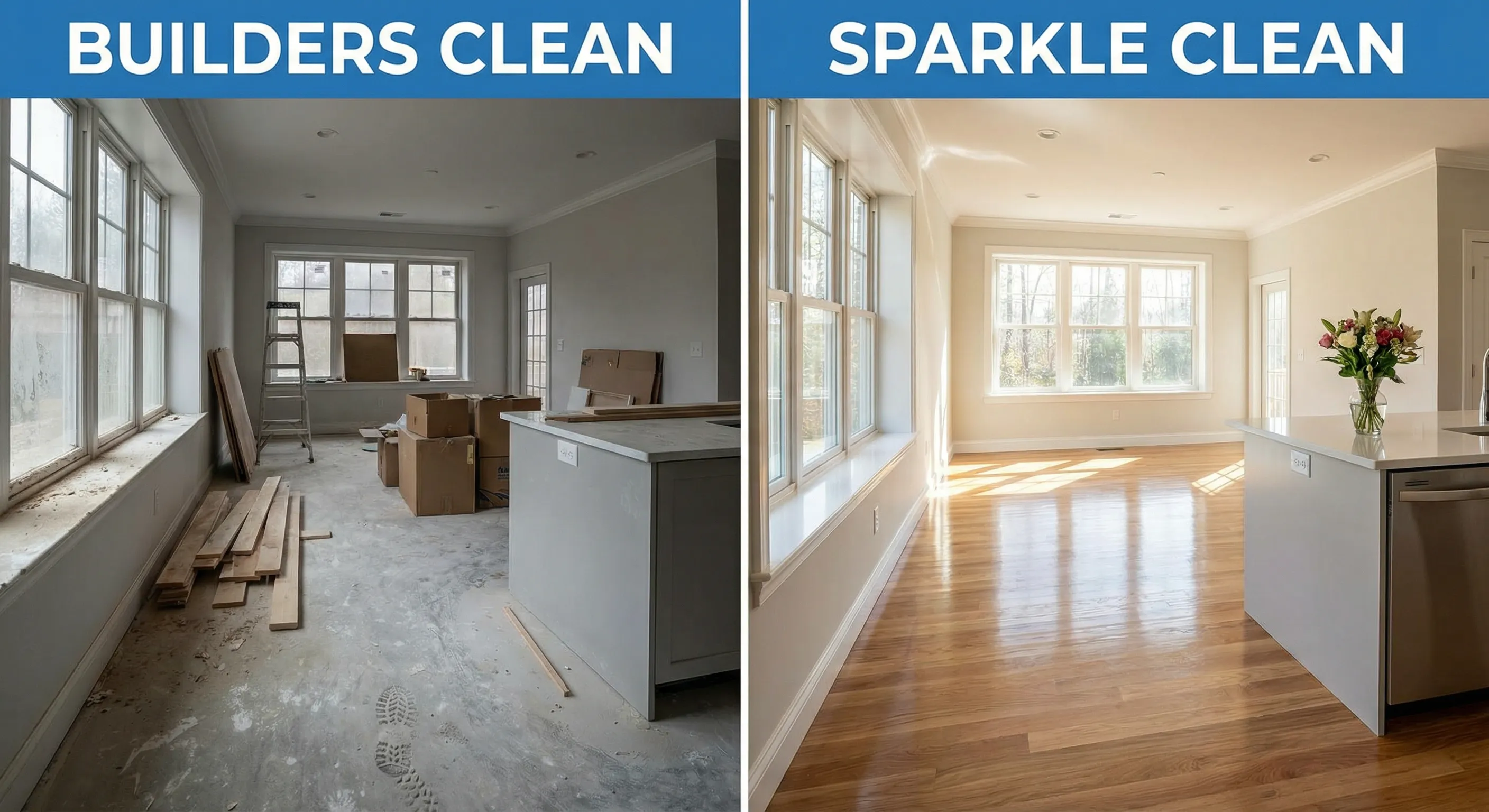
The renovation is finished. The builders have gone. You’re standing in your new extension, and instead of admiring the paintwork, you’re looking at a layer of dust that seems to cover everything.
Your budget has probably been stretched to the limit (building projects always are). So, the natural question is: "Can I just clean this myself?"
On paper, it makes sense. Why pay a professional team when you have a vacuum cleaner and a free weekend?
As specialists in after builders cleaning, we’re obviously biased. But we’re also honest. Yes, you can clean it yourself. The real question isn't "can you," but "should you?" And more importantly: is it actually cheaper in the long run?
We’ve broken down the real costs, risks, and time commitments of DIY vs. Professional cleaning, so you can make the right call for your project.
Table of Contents
- The Hidden Costs of DIY
- Time: The Weekend Trap
- Equipment: Your Dyson vs. Our Industrial Beast
- The Risk Factor: Scratching Your Investment
- Health & Safety: The Silica Problem
- The Verdict: When to DIY and When to Hire Pros
The Hidden Costs of DIY
Most people think DIY cleaning costs £0. In reality, doing a proper builders clean requires more than a bottle of spray and a cloth.
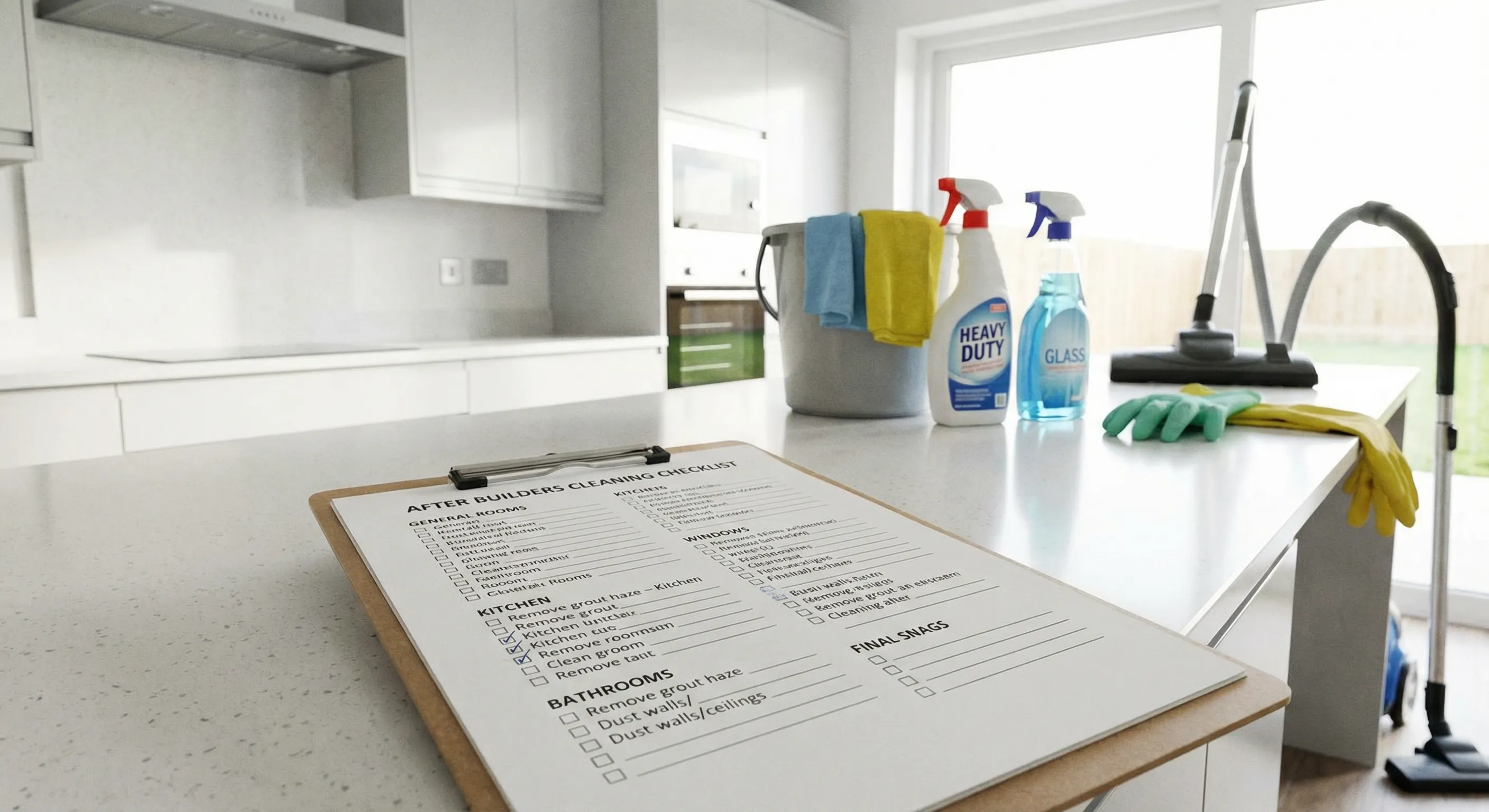
The Shopping List: To get a result that doesn't leave you with dusty socks for the next six months, you'll need:
- Heavy-duty rubble sacks: For the last bits of debris.
- Specialist cleaning solutions: For removing paint splashes, cement residue, and label adhesive.
- Microfibre cloths: You'll need dozens, as they clog with dust instantly.
- Mop heads: You'll go through at least 3-4.
- PPE: FFP3 masks (essential for silica dust), gloves, and goggles.
- Equipment Hire: (See below).
Estimated Cost: £50 - £150 in supplies alone.
Time: The Weekend Trap
"I'll just knock it out on Saturday."
We hear this all the time. The reality? Construction dust is relentless. You wipe a surface, turn around, and five minutes later it's dusty again. This is because standard cleaning kicks dust into the air, where it hangs for hours before settling.
The Reality Check:
- Professional Team (3 people): 6-8 hours for a 3-bed house.
- You (Solo): 18-24 hours (approx. 3 full weekends).
Do you want to spend your first month in your new home scrubbing floors, or enjoying it?
Equipment: Your Dyson vs. Our Industrial Beast
This is the biggest differentiator.
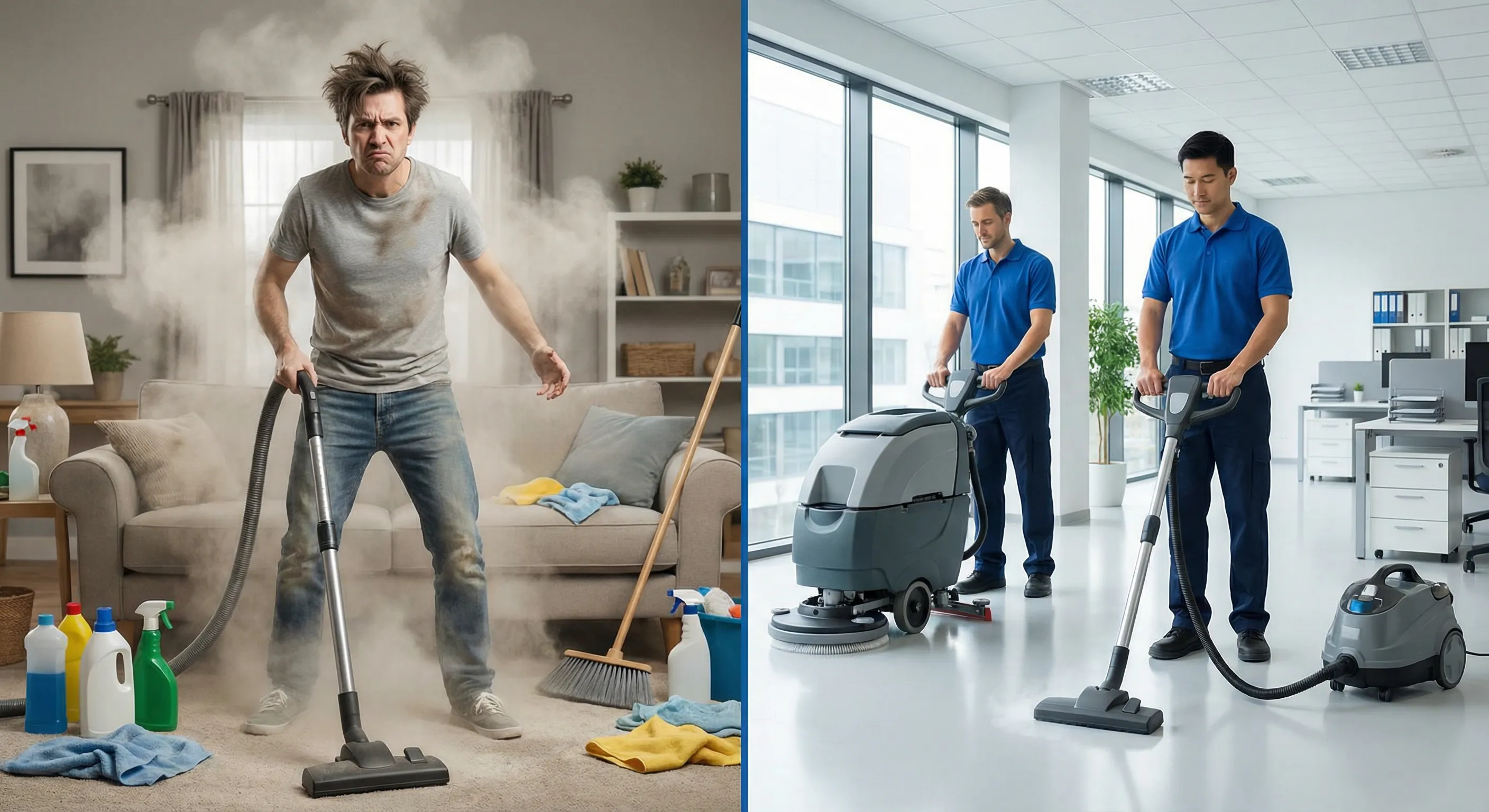
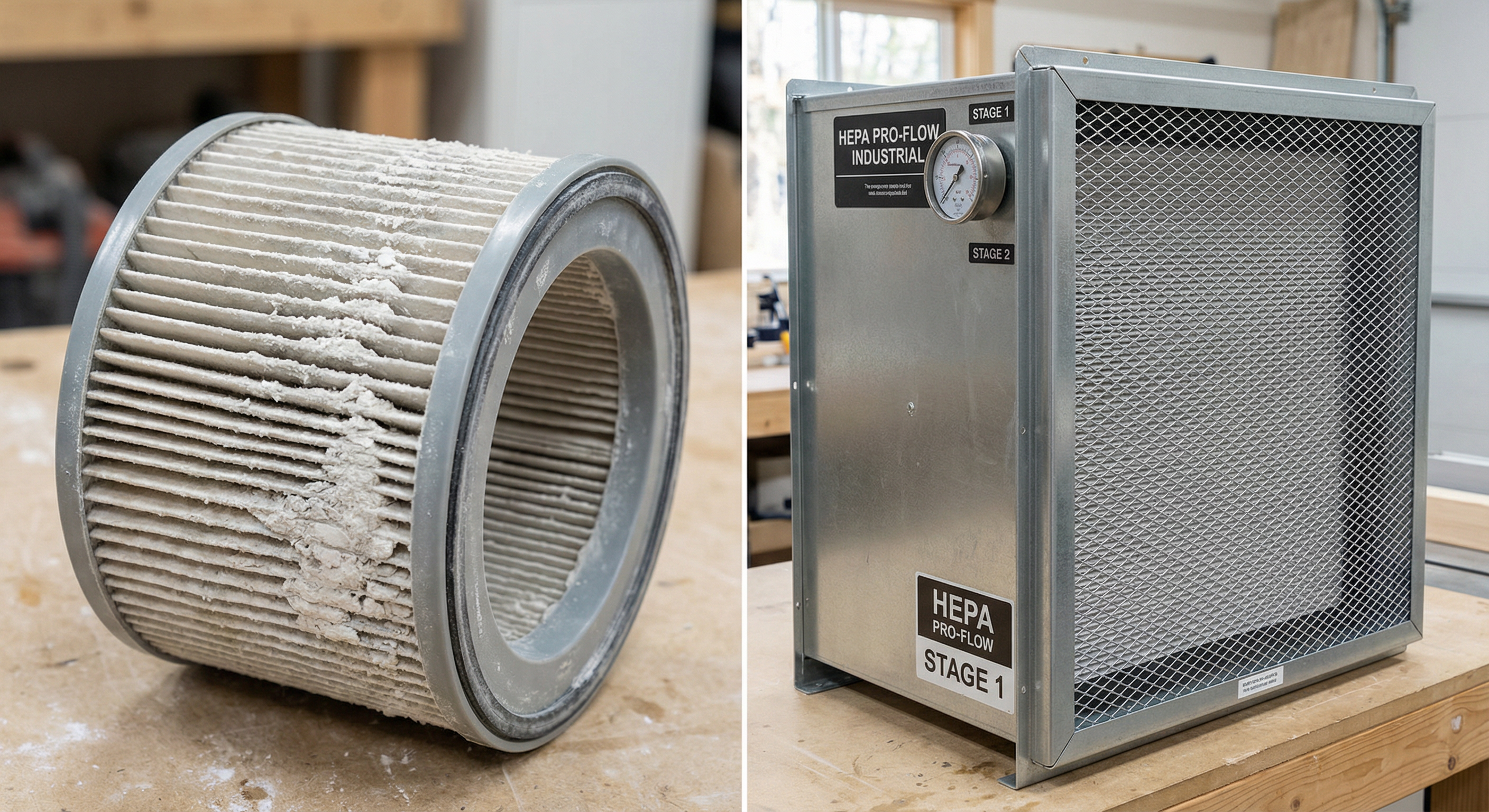
Domestic Vacuums: Designed for fluff, hair, and crumbs. Construction dust is fine, abrasive powder. It clogs filters instantly and can burn out the motor of a standard vacuum. We have seen countless clients destroy their expensive Dysons or Sharks trying to suck up plaster dust.
Industrial Vacuums: We use heavy-duty machines with HEPA filters designed to handle fine particulate matter. They don't just suck up dust; they trap it, ensuring it doesn't get blown back into the room.
The Risk Factor: Scratching Your Investment
You've just spent thousands on new windows, marble worktops, and engineered wood floors. They are currently covered in grit.
The Danger: If you take a cloth and wipe a dusty window, you are essentially sanding it with grit. You will leave permanent micro-scratches.
- Paint on glass: Needs a specialist scraper and lubrication technique.
- Cement on stone: Needs specific acidic cleaners (but the wrong acid will dissolve your stone).
- Grout haze: Needs buffering, not just mopping.
Professionals carry insurance for a reason, but more importantly, they have the technique to clean without damaging.
Health & Safety: The Silica Problem
We've written about this in our checklist guide, but it bears repeating. Construction dust often contains crystalline silica.
Breathing this in is dangerous. A professional team wears fit-tested FFP3 masks and uses equipment that extracts dust from the air. Doing it yourself with a cheap paper mask and a window open exposes you and your family to these particles.
The Verdict: When to DIY and When to Hire Pros
We're not saying you always need a pro. Here is our honest breakdown:
✅ You can probably DIY if:
- It was a small job: Painting one room, or swapping a carpet.
- The builder was tidy: They used dust sheets and cleaned up well.
- You have time: You're not in a rush to move furniture back in.
- You have a shop-vac: And you don't mind getting messy.
❌ You should definitely hire Pros if:
- It was a renovation/extension: Plaster dust is everywhere.
- There is "wet" mess: Paint splashes, cement, grout haze.
- You value your weekends: It's a big job.
- You have high-end finishes: Expensive glazing, stone, or wood that risks scratching.
- Health is a concern: Asthma sufferers, children, or elderly residents.
Is it worth the cost?
If you factor in the cost of supplies, equipment hire (or a broken vacuum), and your own time at even minimum wage, professional cleaning often works out surprisingly cost-effective. Plus, the result is a home that is truly, deeply clean.
Curious about the actual numbers? Check our pricing guide to see what a professional clean might cost for your property.
We serve homeowners and developers across London, including Hampstead, Chelsea, Croydon, and Bromley.
Ready to hand over the scrubbing brush? Contact us for a free quote.