After Builders Cleaning for Period Properties in Chelsea
Renovating a period property in Chelsea is never straightforward. The builders deal with listed building consent, conservation area rules, and the particular demands of 200-year-old construction. The cleaning is no different.
We provide specialist after builders cleaning in Chelsea and have worked on everything from Georgian townhouses around Sloane Square to mansion block apartments on Cadogan Square. The one thing they all have in common: you cannot clean them the same way you'd clean a new build.
The materials are different. The access is different. The stakes are higher. Get it wrong and you're looking at etched marble, damaged cornicing, or paint residue permanently embedded in period hardware.
Table of Contents
- Why Period Properties Need Specialist Post-Build Cleaning
- Georgian Townhouse Cleaning Challenges
- Mansion Block Cleaning: Cadogan Square, Pont Street & Draycott Avenue
- Listed Building Considerations in Chelsea Conservation Areas
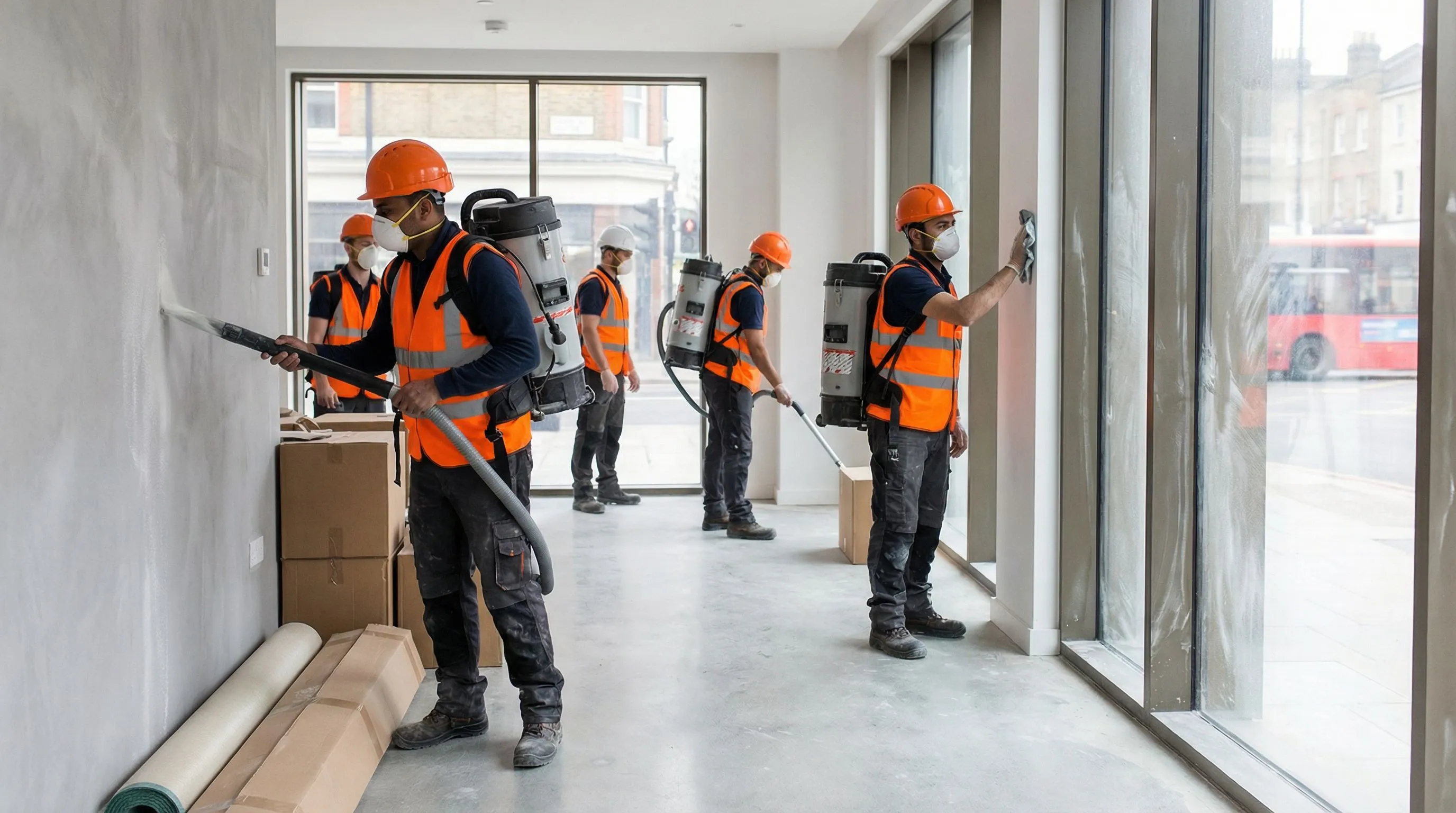
- How We Clean Period Properties Differently
Why Period Properties Need Specialist Post-Build Cleaning
Standard post-construction cleaning assumes flat walls, clean lines, and modern finishes. Period properties in Chelsea have none of that.
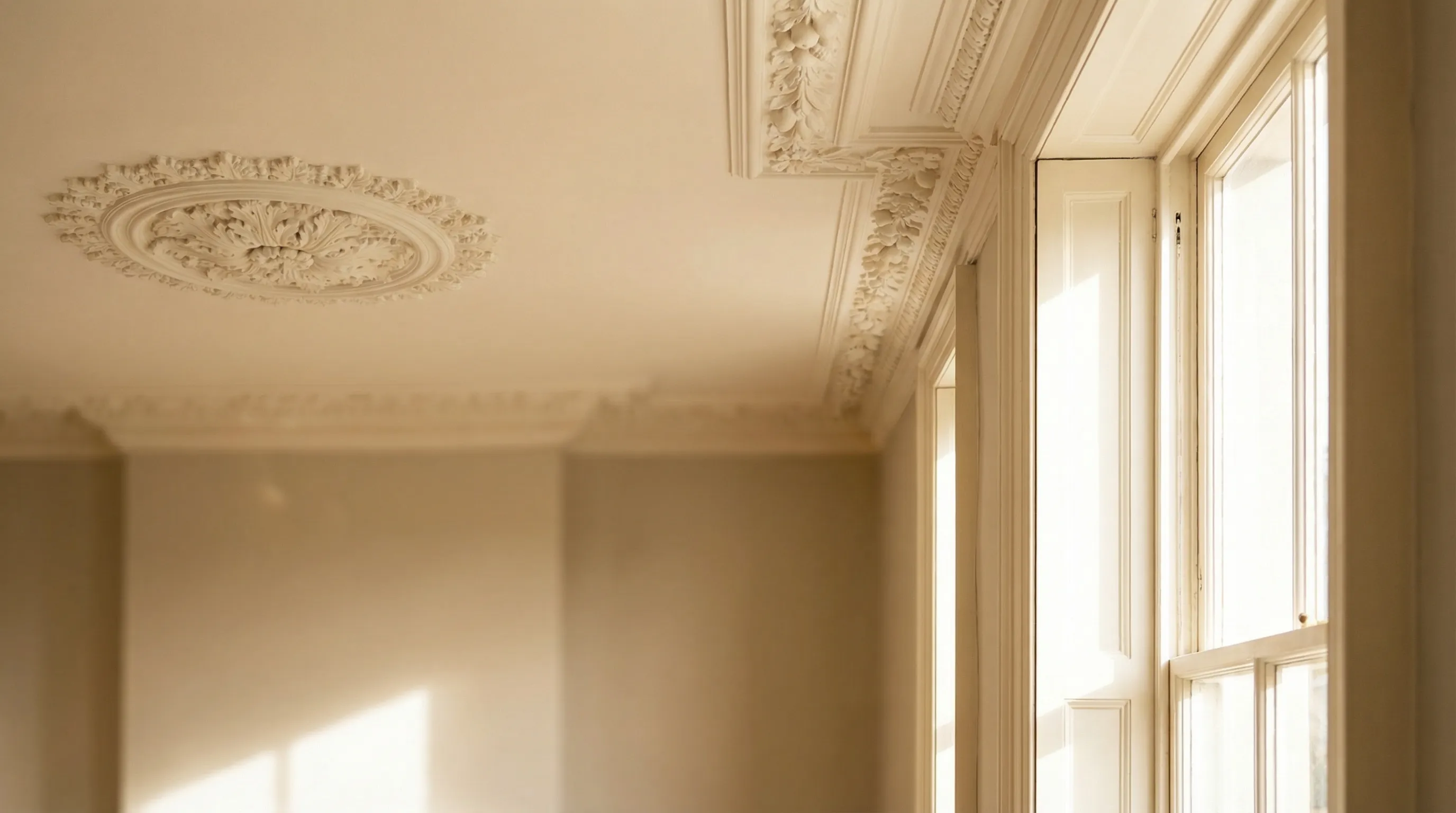
Fine plaster dust doesn't just sit on surfaces in a Georgian townhouse. It migrates into every crevice of ornate cornicing, settles behind original radiators, and works its way into the mechanisms of sash windows.
A quick wipe-down pushes this dust deeper into the detail, creating a smeared finish that's harder to fix than leaving it alone.
Then there's the surfaces. Each one reacts differently to cleaning products:
| Surface | Risk | Correct Approach |
|---|---|---|
| Marble fireplaces | Acidic cleaners cause permanent etching | pH-neutral stone-safe products only |
| Original timber floors | Abrasive grit scratches finish if not removed first | Dry HEPA extraction before any wet contact |
| Ceiling roses & cornicing | Stiff brushes chip fragile restored plaster | Soft-bristle brushes with narrow HEPA nozzle |
| Period brass fittings | Harsh chemicals strip original patina | Specialist metal-safe cleaning agents |
| Sash windows | Scraping gouges brass hardware or timber | Careful solvent work, no blades on period hardware |
For a full breakdown of the cleaning sequence, see our after builders cleaning checklist.
Georgian Townhouse Cleaning Challenges
The Georgian terraces around Cheyne Walk, King's Road, and Sloane Square are some of Chelsea's most distinctive properties. They're also some of the most demanding to clean after building work.
Sash Windows
Paint splatter on period sash hardware needs careful solvent work. Scraping risks gouging original brass or scratching restored timber.
The sash cords and pulleys collect fine dust that affects operation, so these need cleaning out without disturbing the mechanism. On a recent project, we spent over an hour per floor on sash window detailing alone.
Ceiling Roses and Cornicing
These are often original or painstakingly restored. Construction dust settles into every groove and undercut. We use soft-bristle brushes and narrow-nozzle HEPA vacuum attachments to extract particles from each detail. No damp cloths until every bit of loose material is gone.
Marble Fireplaces
Common in the grander Chelsea townhouses. These surfaces need pH-neutral cleaning products only. Anything acidic, including some standard multi-surface sprays you'd find under most kitchen sinks, will dull or etch polished marble permanently.
High Ceilings
Typically 3m+ in Georgian properties. That means scaffolding or specialist access equipment for proper dust extraction. You can't just reach up with an extended duster. That redistributes the particles; it doesn't remove them.
Mansion Block Cleaning: Cadogan Square, Pont Street & Draycott Avenue
Chelsea's mansion blocks present a completely different set of challenges. These are the grand Victorian and Edwardian apartment buildings with communal hallways, porters, and management companies who have strong opinions about what happens in shared spaces.
Here's what we typically navigate on a mansion block clean:
Access logistics. Many mansion blocks have no lift, or a lift too small for industrial cleaning equipment. That means carrying HEPA vacuums, floor machines, and supplies up narrow communal staircases without marking the shared hallways.
Porter coordination. Most buildings require advance notice for trades access, have specific delivery windows, and restrict working hours. We schedule around these constraints as standard.
Out-of-hours cleaning. If the building management restricts daytime work, we run evening or weekend teams. On a recent 4-floor handover clean at Cresswell Place, we structured the entire clean around site access windows.
Communal area protection. Dust migrates through front doors and into shared corridors. We seal work areas with protective sheeting and clean the immediate communal space after the job. Your neighbours and porter will notice if we don't.
Listed Building Considerations in Chelsea Conservation Areas
Chelsea sits across multiple conservation areas, all managed by the Royal Borough of Kensington and Chelsea (RBKC):
- Chelsea CA — residential properties from 1830 onwards
- Hans Town CA — strict controls, particularly on Cadogan Estate properties
- Chelsea Park and Carlyle CA — period residential character
- Thames CA — protected river views and traditional features
Many properties within these areas are listed or subject to strict planning controls. What does this mean for post-construction cleaning?
Waste disposal follows RBKC's Clear Streets regulations. Construction waste can't sit on the pavement beyond the permitted time-banding windows. Skip permits in conservation areas take time to arrange. We handle waste removal to comply with these rules, so there's no risk of fines or complaints.
Cleaning methods must protect original features. In a listed building, original fabric is legally protected. No abrasive techniques on period stonework. No chemical strippers near original timber. No pressure washing that could damage pointing. Our approach prioritises gentle, non-invasive cleaning that preserves what the builders and conservation officers spent months protecting.
Cadogan Estate leaseholds add another layer. Much of Chelsea is leasehold under the Cadogan Estate, and renovations often require estate approval alongside council consent. The cleaning standard expected at handover on Cadogan properties is correspondingly high.
How We Clean Period Properties Differently
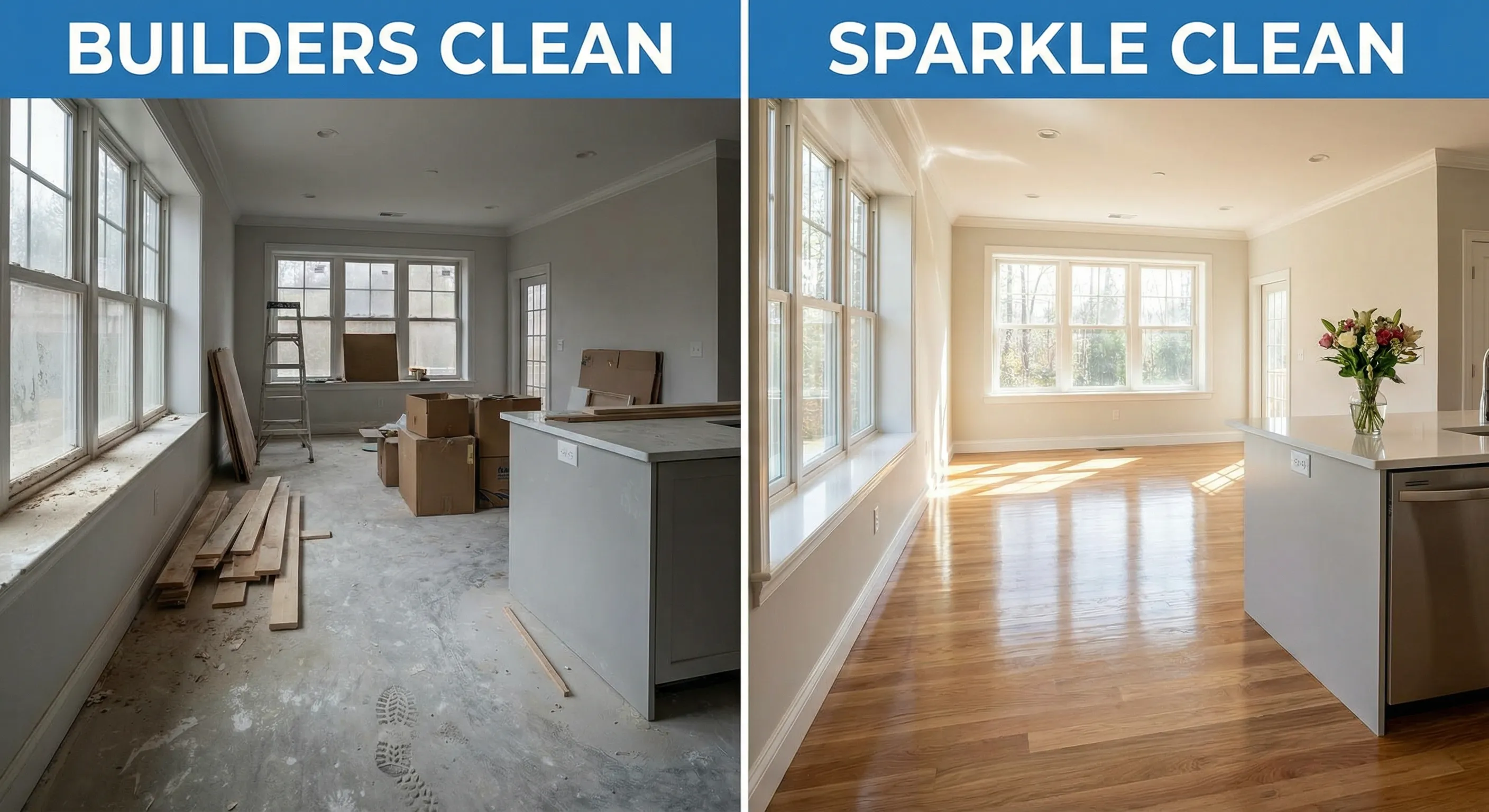
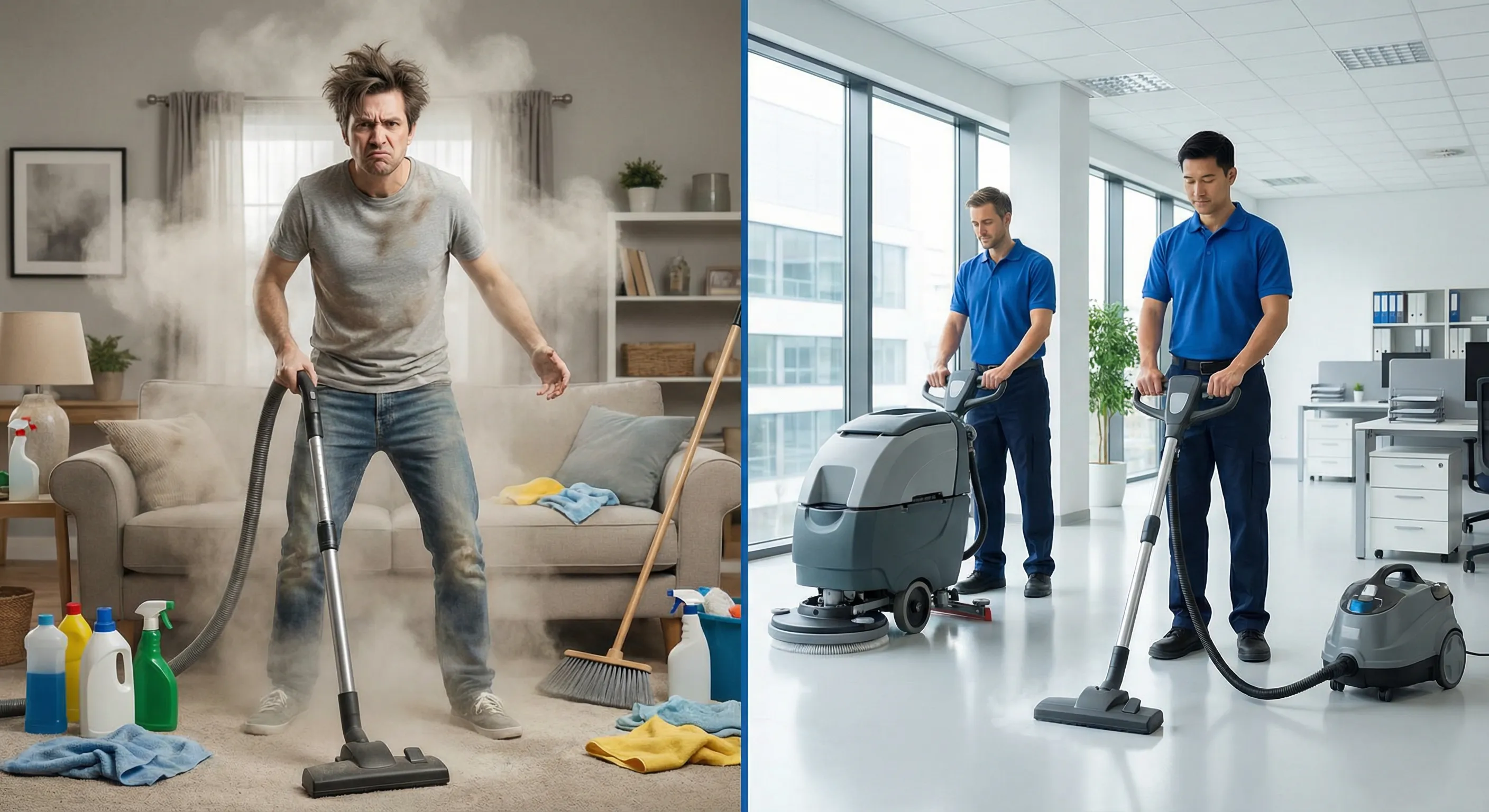
We clean period properties differently because they demand it. Here's how our approach compares to a standard builders clean:
| Standard Builders Clean | Our Period Property Approach | |
|---|---|---|
| Dust removal | Sweep and vacuum | HEPA extraction (99.97% particle capture), dry removal before any wet contact |
| Stone & marble | General multi-surface cleaner | pH-neutral stone-safe products only |
| Cornicing detail | Quick wipe or skip entirely | Soft-brush + narrow HEPA nozzle, groove by groove |
| Floor care | One method for all floors | Surface-specific: timber, encaustic tile, flagstone, parquet each treated differently |
| Access planning | Turn up with kit | Porter scheduling, communal area protection, out-of-hours availability |
| Waste disposal | Standard removal | RBKC Clear Streets compliant, conservation area skip permits arranged |
Every product we use on a period property clean is selected for the specific surface. No guesswork, no "that'll probably be fine." When you're dealing with silica dust in a Grade II listed townhouse, "probably" isn't good enough.
Period properties in Chelsea carry significant value, both financial and architectural. A careless clean can cause damage that's expensive and sometimes impossible to reverse.
Need after builders cleaning for a period property in Chelsea?
Whether it's a Georgian townhouse on Cheyne Walk, a mansion block apartment on Pont Street, or a listed conversion in a conservation area, we've done it before and we know what these properties need.
Request a quote or call us on 0208 058 2037.
Last updated: April 2026.